Concrete Floor Grinding & Surface Preparation in Gaithersburg, MD
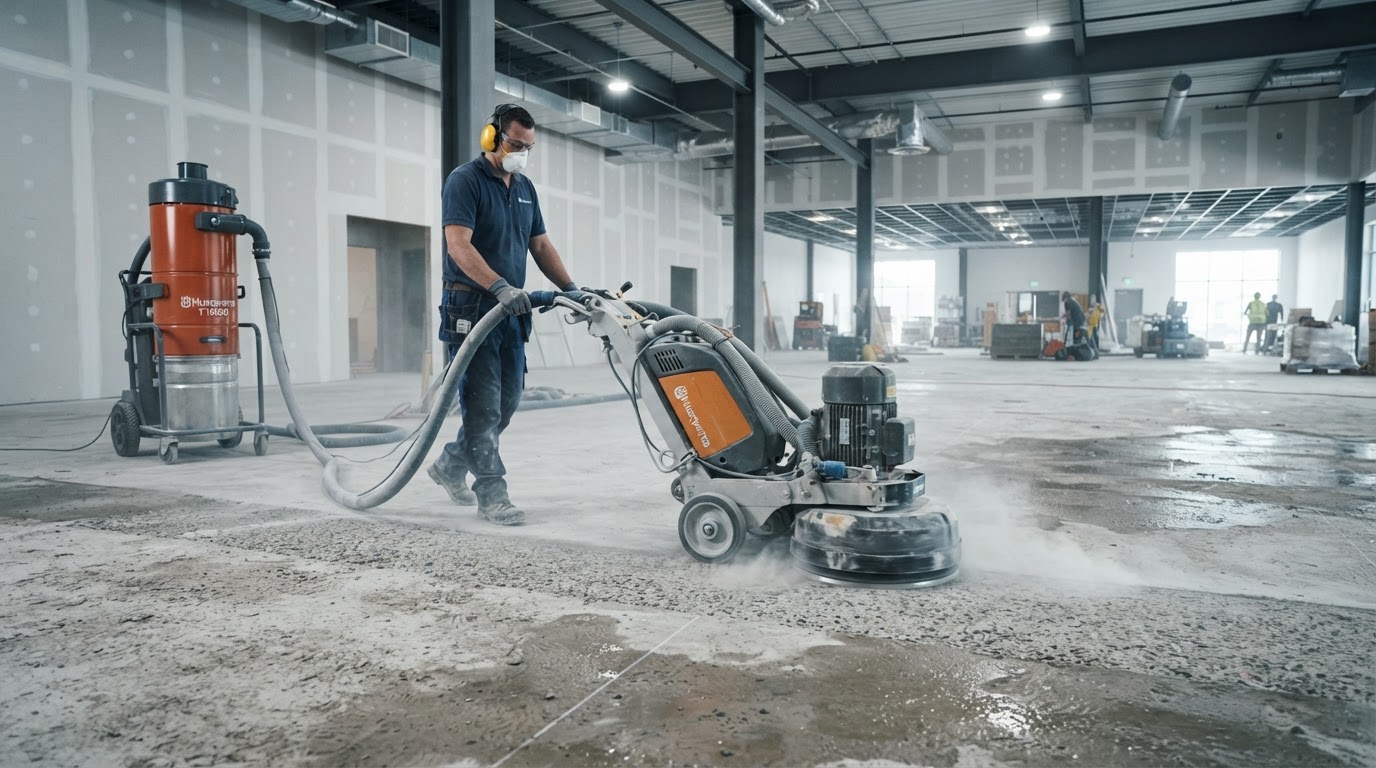
Concrete floor grinding is a mechanical surface-preparation process used to remove or reduce surface coatings, adhesives, contaminants, irregularities, or weak surface material and create a suitable surface profile for subsequent work. Gaithersburg Concrete performs floor grinding and surface preparation for suitable interior and commercial slabs across Gaithersburg, Maryland and surrounding communities. This page targets the preparation step itself — not a finished floor. Grinding is what comes before a coating, sealer, overlay, self-leveling underlayment, polishing, or repair, and it is distinct from our grind and seal page, which describes a complete finished floor system. Grinding does not correct major structural elevation problems, settlement, or deep deterioration; it prepares a suitable surface for the next system.
Request a Free Estimate
Tell us about your concrete project in Gaithersburg or nearby.
Concrete Floor Grinding in Gaithersburg
Concrete floor grinding is a mechanical preparation process used to remove or reduce surface coatings, adhesives, contaminants, irregularities, or weak surface material and create a suitable surface profile for subsequent work. The goal is a clean, profiled, bondable surface — not a finished floor in itself.
The next system applied after grinding may include epoxy, polyaspartic, sealing, overlays, self-leveling underlayment, polishing, or repair. Each of those systems has its own surface-profile requirement, and the grinding step is selected to match the system that will follow.
This page is about surface preparation. It is distinct from our grind and seal page, which describes a complete finished floor system that combines mechanical grinding with an applied sealer or topcoat. Grinding here is the preparation step — or a standalone surface correction — that makes the next floor system possible.
When Concrete Surface Preparation Is Needed
Surface preparation is needed whenever a new floor system has to bond to the concrete rather than to contamination sitting on top of it. Common situations include old floor coatings, failed epoxy, adhesive residue from prior floor coverings, thin surface contamination, uneven coating layers, surface laitance, paint removal where suitable, preparation before new coatings, preparation before overlays, edge transitions, and localized high spots.
What Grinding Does Not Correct
Grinding is a surface process. It does not correct major structural elevation problems, deep slab settlement, structural cracks, or severe deterioration. Where the slab has failed structurally, concrete repair, leveling, or replacement is the appropriate path — not grinding. We assess the floor before recommending grinding and tell you plainly when a different service is the better fit.
Concrete Grinding & Surface Preparation Process
A sound surface-preparation project follows the condition of the floor. The slab is inspected, the existing materials are identified, and the mechanical preparation method is selected to match what the next system requires.
- 1Inspect the floor — assess the slab condition, hardness, and existing surface materials.
- 2Identify existing materials — determine what coatings, adhesives, mastics, paint, or sealers are present.
- 3Assess slab condition — check for cracks, joints, spalling, and surface defects.
- 4Select the appropriate mechanical preparation method — match the abrasive and equipment to the material being removed and the profile required.
- 5Grind the main field — remove coatings, adhesives, and weak surface material across the open floor.
- 6Edge grinding — address the perimeter and edges the main field cannot reach.
- 7Remove debris and dust — clean the prepared surface so nothing interferes with the next system.
- 8Assess cracks and joints — review how existing cracks and joints will be treated by the next system.
- 9Perform additional preparation as needed — patching, localized repair, or further profiling where required.
- 10Verify readiness for the next system — confirm the surface profile suits the coating, sealer, overlay, or underlayment that will follow.
We do not state that all adhesives or coatings are safely removable without testing. Some materials, mastics, or contaminants require testing to determine whether they can be fully removed and what preparation they demand. We assess the floor and tell you what we find.
Surface Profiles, Coating Removal & Floor Condition
Different coatings and underlayments may require different surface profiles. The concrete's condition — whether it is weak, hard, contaminated, cracked, or patched — drives what preparation is required and what the next system can bond to.
Floor-Condition Variables
- Weak or soft concrete that requires a gentler preparation approach
- Hard, dense concrete that requires a more aggressive profile
- Old coatings, sealers, or curing compounds that must be removed
- Adhesives and mastics from prior floor coverings
- Paint or surface treatments where removal is suitable
- Oil, grease, or chemical contamination that must be addressed
- Moisture conditions that affect the next system's suitability
- Cracks, joints, and patching that remain part of the prepared surface
We do not invent industry profile numbers unless they are actually verified and appropriate for the selected next system. The right profile is the one the next coating, sealer, overlay, or underlayment requires — and that depends on the product system, not a universal standard.
How the Floor Services Differ
Grinding vs. Other Floor Services
| Service | What It Is |
|---|---|
| Floor grinding | Mechanical surface preparation — the step before a finish |
| Polishing | Finished mechanical refinement of the concrete surface |
| Grind & seal | Mechanical grinding plus an applied sealer or topcoat |
| Self-leveling | Cementitious material applied after suitable preparation |
For the finished floor systems that follow grinding, see our polished concrete, grind and seal, epoxy, polyaspartic, and self-leveling underlayment pages.
What Floor Grinding Cannot Fix
Grinding is a surface process. It prepares a suitable slab for the next system, but it does not correct the structural conditions that cause floors to fail. Grinding alone does not correct:
- Major slab settlement or uneven floors caused by subgrade failure
- Structural cracks or active slab movement
- Deep deterioration or severely spalled concrete
- Active moisture intrusion through the slab
- A failed or inadequate base beneath the concrete
- Large elevation changes between slabs or within a floor
- Structural movement that a coating or underlayment will not compensate for
Where those conditions exist, the right path is concrete repair, leveling, or replacement — not grinding. We assess the floor and refer you to the appropriate service rather than grinding a slab that needs structural work.
For structural conditions grinding will not address, see our concrete repair, concrete leveling, and concrete demolition pages, and for interior slab installation, our basement and interior concrete floors page.
Discuss Your Concrete Project
Have questions about scope, timing, or whether repair or replacement is the right call? We are happy to review your project and provide a clear, honest estimate.
Concrete Floor Grinding FAQs & Estimates
Why is concrete ground before coating?
Concrete is ground before coating so the coating bonds to the concrete itself rather than to contamination, old sealers, adhesives, or a weak surface layer. Mechanical preparation creates the surface profile the next system requires for adhesion and long-term performance.
Can grinding remove old epoxy?
Many old epoxy coatings can be removed by mechanical grinding, but the ease and completeness of removal depend on the coating's age, bond, and thickness, and on the slab's condition. Some coatings require testing to determine whether they can be fully removed. We assess the floor before recommending grinding for coating removal.
Can grinding remove adhesive?
Many adhesives and mastics from prior floor coverings can be reduced or removed by grinding, but some residues require testing or additional preparation to fully clear. We identify the existing materials and assess what preparation they demand before recommending a grinding approach.
Does grinding level a concrete floor?
Grinding can reduce minor surface irregularities and localized high spots, but it does not correct major elevation changes, settlement, or a slab that has sunk. For a settled or significantly uneven floor, concrete leveling or replacement is the appropriate path — grinding is a surface process, not a structural correction.
Can cracks be repaired after grinding?
Yes. Grinding exposes the surface so cracks and joints can be assessed and treated before the next system is applied. Stable cracks can often be repaired; active movement or structural cracking may require concrete repair or a different approach. We review cracks as part of the preparation process.
Is floor grinding dusty?
Mechanical grinding generates dust, and the amount depends on the equipment, the slab, and whether dust-collection equipment is used. We do not claim dust-free results unless verified for the specific setup. We plan the preparation to manage dust appropriate to the space and the work.
What affects concrete grinding cost?
Cost depends on the square footage, the existing coatings or adhesives present, the concrete's hardness, edge work, contamination, and the number of passes required to reach the profile the next system needs. A floor with extensive coatings or adhesives costs more to prepare than a clean slab. We provide project-specific estimates based on the actual floor.
Discuss Surface Preparation
If you need a concrete floor ground and prepared for a coating, sealer, overlay, underlayment, or repair, Gaithersburg Concrete will inspect the slab, identify what needs to be removed, and provide a clear estimate. Serving Gaithersburg and surrounding Montgomery County communities.
Related Concrete Services Near Gaithersburg
Grind & Seal Concrete Floors
Grind and seal concrete floors that mechanically prepare and refine a surface, then apply a compatible sealer or protective finish over the prepared floor.
Learn morePolished Concrete Floors
Mechanically refined polished concrete floors for suitable commercial interiors, warehouses, and basements where the slab condition supports polishing.
Learn moreEpoxy Garage & Commercial Floor Coatings
Epoxy floor coatings applied over properly prepared concrete for suitable residential garages, workshops, and commercial floors, with preparation and repair planned first.
Learn morePolyaspartic Concrete Floor Coatings
Polyaspartic resin-based floor coatings for suitable garage and commercial concrete floors, applied over properly prepared concrete where the selected system fits the intended use.
Learn moreSelf-Leveling Concrete & Cementitious Underlayment
Self-leveling cementitious underlayment used over a properly prepared interior substrate to improve surface flatness or create a suitable surface for subsequent flooring systems.
Learn moreConcrete Repair & Crack Repair
Targeted structural crack filling, spalling remediation, and damaged section patching to extend concrete longevity.
Learn moreDiscuss Surface Preparation
If you need a concrete floor ground and prepared for a coating, sealer, overlay, underlayment, or repair, Gaithersburg Concrete will inspect the slab, identify what needs to be removed, and provide a clear estimate. Serving Gaithersburg and surrounding Montgomery County communities.
- Project-specific estimates — no obligation
- Residential and commercial concrete work
- Serving Gaithersburg and surrounding Montgomery County
Request a Free Estimate
Tell us about your concrete project in Gaithersburg or nearby.