Concrete Leveling, Lifting & Mudjacking in Gaithersburg, MD
Concrete leveling, lifting, and mudjacking address sunken and uneven slabs that have created trip hazards, pooling water, and awkward transitions across Gaithersburg properties. Gaithersburg Concrete evaluates settled sidewalks, driveway sections, patios, and stoops to determine whether the slab is a candidate for lifting — raising it back toward grade without full replacement — or whether the concrete is too damaged to save. Not every slab can be leveled, so every project starts with an honest assessment of the slab's condition and the cause of the settlement. Where lifting is appropriate, it can be a faster, less disruptive alternative to demolition and repour.
Concrete Leveling in Gaithersburg
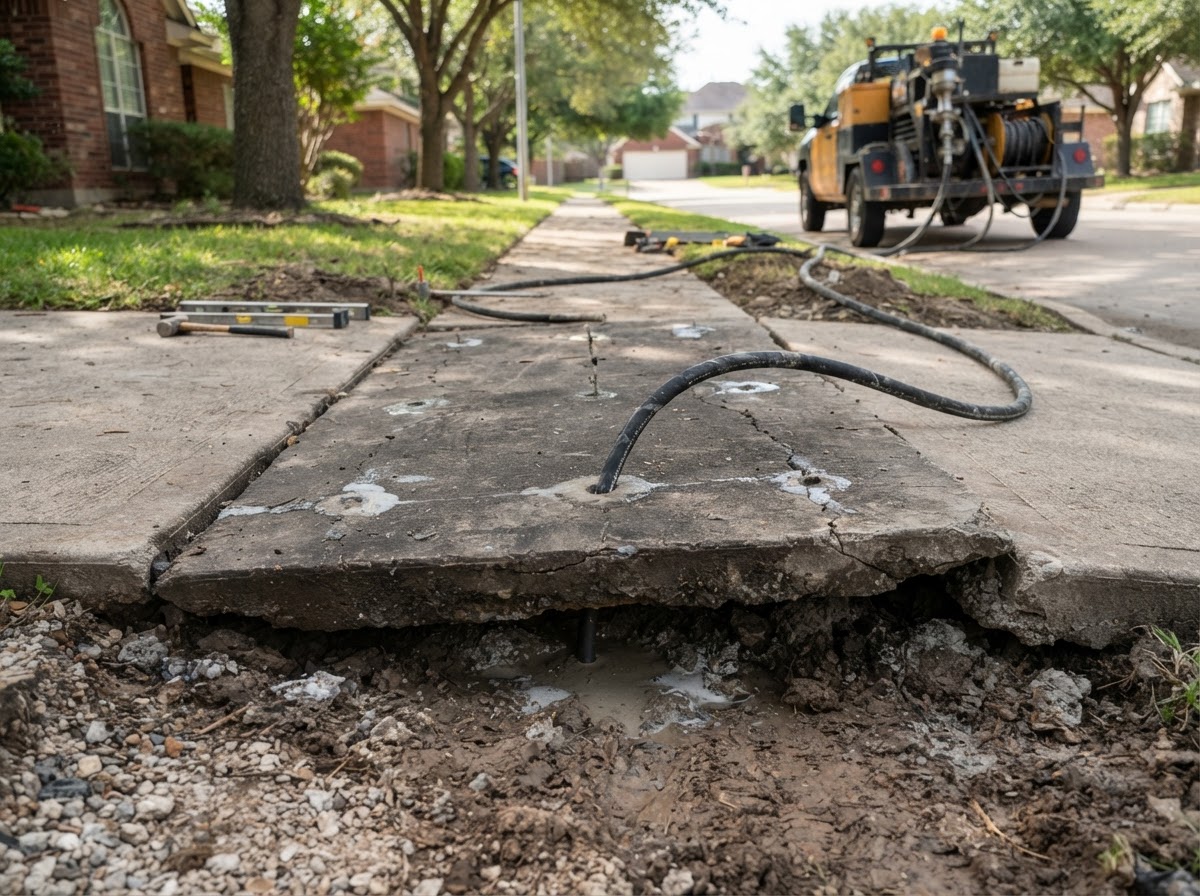
Concrete leveling — also called slab lifting or mudjacking — is the process of raising a settled concrete slab back toward its original elevation by filling the void beneath it. When the base beneath a slab compacts, erodes, or shifts, the slab drops, creating uneven panels, trip hazards, and water that pools on the low surface. Leveling addresses the result of that settlement by lifting the slab rather than replacing it.
This approach is appealing because it reuses the existing slab and avoids the demolition, excavation, and repour of full replacement. Where the concrete is still structurally sound, leveling can restore a safe, even surface at a lower cost and with less disruption. But leveling is not a universal solution — a slab that is severely cracked, broken, or structurally compromised is not a good candidate.
Mudjacking is one common leveling method, using a slurry pumped beneath the slab to lift it. We do not falsely claim one proprietary method when the specific approach depends on the project; the principle — filling voids and raising the slab — is what defines leveling work.
Signs a Concrete Slab May Need Leveling
Settlement shows up in predictable ways. The question is whether the settled slab is sound enough to lift or whether it has deteriorated past the point where leveling makes sense.
Common Signs of Settlement
- Uneven sidewalk panels sitting at different elevations
- Sunken driveway sections that have dropped below their neighbors
- Patio settlement that creates pooling water or trip hazards
- Water pooling on surfaces where the slab has dipped
- Step and stoop transitions that have become uneven
- Trip hazards where one panel has settled below another
Not all slabs are candidates. A slab with extensive cracking, broken sections, or major deterioration is often better replaced, because lifting damaged concrete does not make it sound. We assess the slab's condition before recommending leveling — if the concrete is too far gone, we tell you and recommend replacement instead.
How Concrete Lifting & Mudjacking Works
Leveling works by filling the void beneath a settled slab to raise it back toward grade. The process is less disruptive than replacement because the existing concrete is reused.
- 1Evaluation — confirm the slab is sound enough to lift and identify the settled sections.
- 2Identifying settled sections — map where the voids and drops are located.
- 3Access points — create small access holes through which lifting material is introduced.
- 4Lifting material — pump a slurry or material beneath the slab to fill the void.
- 5Controlled raising — lift the slab gradually back toward the correct elevation.
- 6Void filling — ensure the space beneath the slab is fully supported.
- 7Patching access points — fill the small holes used to introduce the lifting material.
We do not falsely state one proprietary method when the specific lifting material and approach depend on the project. The principle is consistent: fill the void, support the slab, and raise it to a safe, even elevation where the concrete is sound enough to be lifted.
Concrete Leveling vs. Replacement
Leveling preserves an otherwise usable slab, which makes it faster and less expensive than replacement when the concrete is sound. It is the right choice when the surface is intact but has dropped — a sidewalk panel that has settled, a patio section that has dipped, a driveway slab that sits below its neighbors.
Replacement is the better choice when the concrete itself is failing. Severely cracked surfaces, broken concrete, major deterioration, and failed slabs cannot be saved by lifting — the damage is in the slab, not just beneath it. In those cases, leveling would raise damaged concrete that is still damaged, so replacement is the more durable solution.
Where the slab is sound but has cracks that need addressing, concrete repair can treat the cracks before or alongside leveling. For a driveway that has deteriorated beyond lifting, full driveway replacement is the cleaner path, and settled sidewalk panels are a natural fit for our concrete walkway services. We recommend the approach that fits the slab's actual condition.
Sunken slabs and uneven transitions can create trip hazards around sidewalks, patios and other flatwork. For that specific problem, our sunken concrete slab leveling and trip hazard repair page walks through the symptoms and options in more detail.
See our dedicated sunken concrete and trip hazard repair page for more on settled slabs and uneven transitions.
Why Concrete Sinks or Becomes Uneven in Gaithersburg
Concrete sinks when the material beneath it moves. Base settlement, erosion, water running beneath the slab, voids, poor drainage, and ground movement all contribute to a slab dropping below its original grade. In Gaithersburg, freeze-thaw cycles add to the problem — moisture in the base expands and contracts with the seasons, gradually loosening and shifting the material the slab rests on.
Water is the most common driver. Poor drainage that directs runoff beneath a slab erodes the base over time, creating voids that the slab drops into. The freeze-thaw cycles common in Maryland accelerate this, as repeated freezing and thawing loosens and shifts the base material. Ground movement and the natural settling of soil over years also play a role.
We avoid pretending to diagnose the exact cause without inspection — settlement can result from any combination of these factors, and the right fix depends on what is actually happening beneath the slab. That is why evaluation comes first: understanding the cause helps determine whether leveling will hold or whether the underlying issue needs to be addressed alongside the lift.
Discuss Your Concrete Project
Have questions about scope, timing, or whether repair or replacement is the right call? We are happy to review your project and provide a clear, honest estimate.
Concrete Leveling FAQs
What is concrete leveling?
Concrete leveling is the process of raising a settled slab back toward its original elevation by filling the void beneath it. The slab is lifted rather than replaced, which reuses the existing concrete and avoids demolition. It is appropriate when the slab is structurally sound but has dropped due to base settlement or erosion.
What is mudjacking?
Mudjacking is a common leveling method that pumps a slurry beneath a settled slab to fill voids and lift the concrete back to grade. The slurry supports the slab from below. It is one approach to leveling; the specific method depends on the project and slab condition.
Can cracked concrete be lifted?
It depends on the extent of the cracking. Minor cracks in an otherwise sound slab may be acceptable, but extensive cracking or broken concrete means the slab is too damaged to lift reliably. We assess whether the concrete is structurally sound enough to be a leveling candidate before recommending it.
How much does concrete leveling cost?
Concrete leveling cost depends on the size and number of settled sections, the lifting method, the extent of voids beneath the slab, and site access. Leveling is typically less expensive than full replacement when the slab is sound. We provide project-specific estimates based on the actual conditions.
Is leveling better than replacement?
Leveling is better when the slab is structurally sound and only the elevation is the problem — it reuses the existing concrete at lower cost and disruption. Replacement is better when the concrete is severely cracked, broken, or deteriorated. We recommend the approach that fits the slab's actual condition.
What causes a concrete slab to sink?
A slab sinks when the base beneath it compacts, erodes, or shifts. Poor drainage, water running beneath the slab, freeze-thaw cycles, voids, and ground movement all contribute. Understanding the cause helps determine whether leveling will hold or whether the underlying issue also needs to be addressed.
Can sidewalks and patios be leveled?
Yes, sidewalks, patios, driveway sections, and stoops can often be leveled when the concrete is sound and only the elevation has dropped. Leveling restores an even surface and removes trip hazards without replacing the slab. We assess each slab to confirm it is a candidate before recommending leveling.
Request a Concrete Leveling Estimate
Have a sunken sidewalk, settled patio, or uneven driveway section? Gaithersburg Concrete will assess whether the slab can be leveled or needs replacement and give you an honest recommendation. Call (240) 690-6035 or request a free estimate.
Related Concrete Services Near Gaithersburg
Concrete Repair & Crack Repair
Targeted structural crack filling, spalling remediation, and damaged section patching to extend concrete longevity.
Learn moreConcrete Driveway Installation & Replacement
Durable residential and light commercial concrete driveways built to withstand vehicular weight and Maryland freeze-thaw cycles.
Learn moreConcrete Sidewalks, Walkways & Paths
Safe, level pedestrian access ways, garden paths, front walkways, and commercial footpaths built for heavy foot traffic.
Learn moreRequest a Concrete Leveling Estimate
Have a sunken sidewalk, settled patio, or uneven driveway section? Gaithersburg Concrete will assess whether the slab can be leveled or needs replacement and give you an honest recommendation. Call (240) 690-6035 or request a free estimate.
- Project-specific estimates — no obligation
- Residential and commercial concrete work
- Serving Gaithersburg and surrounding Montgomery County
Request a Free Estimate
Tell us about your concrete project in Gaithersburg or nearby.