Sunken Concrete Slab Leveling & Trip Hazard Repair in Gaithersburg, MD
Sunken concrete creates uneven transitions and trip hazards on sidewalks, driveways, patios, and walkways — and Gaithersburg Concrete addresses settled slabs and trip hazards for properties in Gaithersburg, Maryland and surrounding service areas. When a concrete slab sinks, it creates height differences between adjacent panels, water pooling in low spots, and trip points that are especially dangerous on walkways and entry transitions. Every sunken slab project starts with an evaluation of the slab's condition, because not every settled slab can be lifted — some are too cracked or deteriorated for leveling and need replacement instead. We do not claim all slabs can be lifted; instead, we assess whether leveling is appropriate for the specific slab and recommend the approach that will safely address the hazard.
Sunken Concrete Repair in Gaithersburg
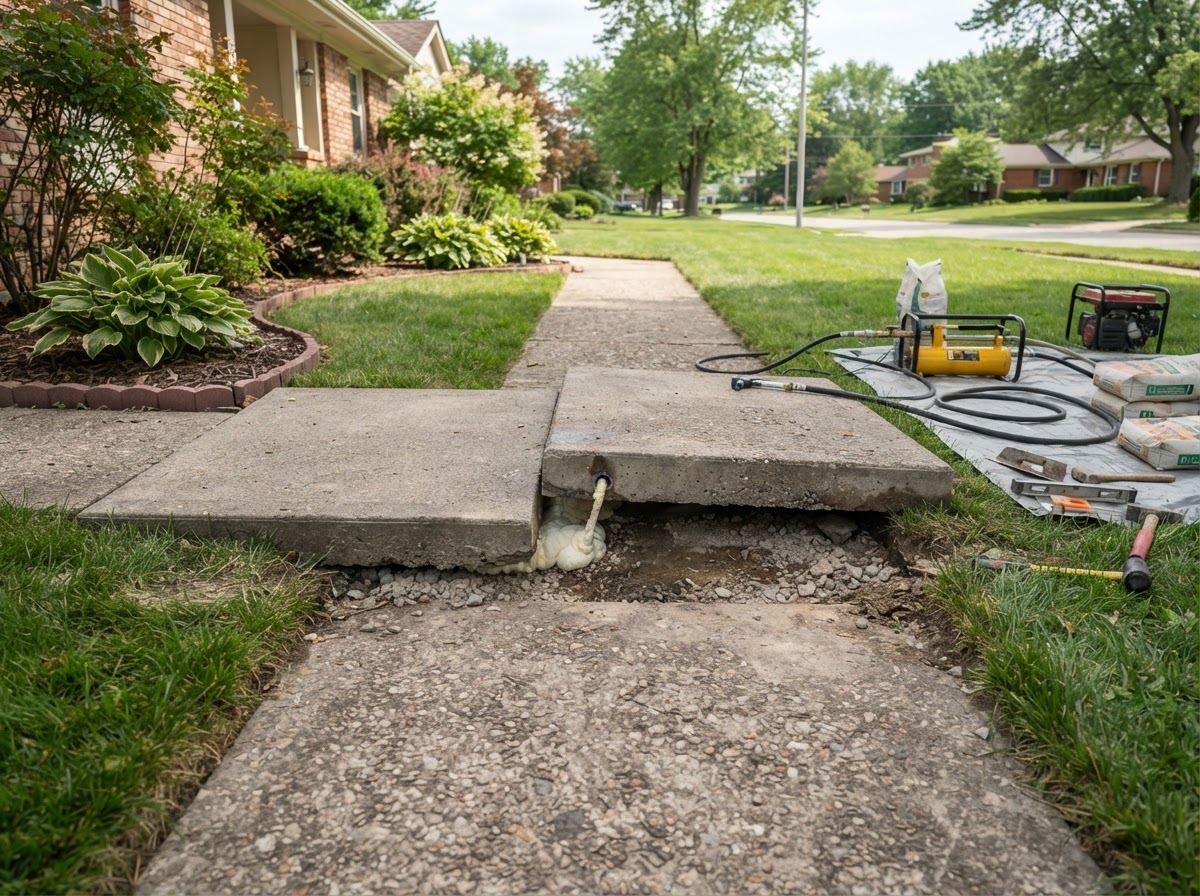
Sunken concrete is a slab or panel that has dropped below the elevation of the surrounding concrete, creating an uneven transition between the two. The height difference — sometimes an inch or more — creates a trip hazard on walkways, a lip at driveway transitions, and a low spot where water collects. Sunken slabs are common on sidewalks, driveways, patios, and walkways across Gaithersburg properties.
Sunken concrete repair focuses on addressing the height difference and the trip hazard it creates. Depending on the slab's condition, that may involve leveling — raising the settled slab back toward its original elevation — or replacement when the slab is too damaged to lift. The goal is to eliminate the trip hazard and restore a safe, even surface.
Because not every settled slab can be lifted, the planning phase — slab condition, crack extent, and underlying cause — determines whether leveling or replacement is the right approach. A slab that is cracked through or severely deteriorated may not hold during lifting, and those situations need replacement instead. We assess the slab before recommending an approach.
Signs Concrete Has Settled or Sunk
Settled concrete shows recognizable signs that a slab has dropped below its original elevation. Identifying these signs — and how severe the settlement is — is the first step in determining whether leveling or replacement is appropriate.
Signs of Settlement
- Height differences between adjacent slab panels
- Water pooling in low spots where the slab has dropped
- Uneven joints where one side sits lower than the other
- Sloped panels that tilt toward a settled area
- Entry transitions where a step height has changed
- Trip points at panel edges and transitions
- Movement from adjacent slabs that have shifted at different rates
The severity of the settlement affects the repair approach. A slab that has dropped slightly and is still intact may be a good leveling candidate, while a slab that has dropped significantly, cracked, or broken into pieces may need replacement. We assess the height difference, crack extent, and slab condition before recommending an approach.
How Sunken Concrete Can Be Leveled
Concrete leveling raises a settled slab back toward its original elevation by filling the void beneath it and lifting the concrete from below. The process is conceptually straightforward, but it depends on the slab being intact enough to lift.
- 1Evaluation — assess the slab's condition, settlement extent, and whether it can be lifted.
- 2Slab condition check — confirm the concrete is not cracked through or severely deteriorated.
- 3Identifying the settled area — map where the slab has dropped and by how much.
- 4Lifting approach — plan the leveling method based on the slab and site conditions.
- 5Void filling — fill the space beneath the slab that caused the settlement.
- 6Mudjacking or appropriate lifting methods — raise the slab in a controlled manner.
- 7Access-point repair — patch the holes used for the lifting process.
We do not claim all slabs can be lifted. A slab that is cracked through, broken into pieces, or severely deteriorated may not hold during lifting, and those situations need replacement instead. We assess whether leveling is appropriate for the specific slab before recommending it.
Leveling vs. Grinding vs. Replacement
Three different approaches address uneven concrete, and each solves a different problem. Choosing the right one depends on whether the slab has sunk, risen, or deteriorated.
How the Approaches Differ
- Leveling — raises a settled slab back toward its original elevation by filling the void beneath it, appropriate when the slab is intact and only the elevation has dropped.
- Grinding — may reduce certain raised edges where one slab sits higher than another, but it does not correct the underlying movement or address settled slabs.
- Replacement — removes and repours the slab, appropriate for broken, severely deteriorated, or unsuitable slabs that cannot be leveled.
We do not imply grinding is always offered if it is not part of the scope. For broad leveling services, our concrete leveling, lifting, and mudjacking page covers slab raising in detail. General concrete repair addresses cracks and damage on settled slabs, sidewalks and walkways are common leveling targets, and driveway replacement handles full slab replacement when leveling is not appropriate.
What Causes Concrete to Sink?
Concrete sinks when the support beneath it is lost. The most common causes are base settlement, erosion, and voids that form when the material under the slab compacts, washes away, or shifts over time. Water is the central driver — poor drainage, runoff beneath the slab, and water that finds its way under the concrete all erode the base and create the voids that allow settlement.
Freeze-thaw cycles contribute to settlement in Gaithersburg. Moisture that enters the base expands as it freezes, shifting the material beneath the slab, and then thaws, leaving voids. Ground movement, poor support from inadequately compacted subgrade, and drainage that directs water beneath the concrete all accelerate the process.
We avoid diagnosing the cause without a site review. The reason a specific slab sank — whether it is erosion, base compaction, drainage, or ground movement — needs to be assessed on site so the repair addresses the underlying cause rather than just the symptom. Leveling a slab without addressing the cause may lead to repeat settlement, so we evaluate what drove the settlement before recommending an approach.
Discuss Your Concrete Project
Have questions about scope, timing, or whether repair or replacement is the right call? We are happy to review your project and provide a clear, honest estimate.
Sunken Concrete & Trip Hazard FAQs
Can sunken concrete be raised?
Yes, sunken concrete can often be raised through leveling, but not every slab is a candidate. A slab that is intact and only dropped in elevation can typically be lifted, while a slab that is cracked through, broken, or severely deteriorated may need replacement instead. We assess the slab's condition before recommending leveling.
What causes a concrete sidewalk to sink?
A sidewalk sinks when the base beneath it settles, erodes, or shifts, creating a void that the slab drops into. Poor drainage, water running beneath the slab, freeze-thaw cycles, and inadequately compacted subgrade all contribute. We assess the specific cause on site so the repair addresses what drove the settlement.
Can trip hazards be repaired without replacing concrete?
Sometimes. If the slab is intact and only the elevation has dropped, leveling can raise it and eliminate the trip hazard without replacement. If the slab is cracked, broken, or severely deteriorated, replacement is usually necessary. We assess whether the slab can be leveled or needs replacement based on its condition.
Is mudjacking the same as concrete leveling?
Mudjacking is one method of concrete leveling that uses a slurry pumped beneath the slab to fill voids and raise the concrete. Concrete leveling is the broader process of raising a settled slab, and mudjacking is one approach within that process. We plan the lifting method based on the slab and site conditions.
Can cracked concrete still be lifted?
It depends on the crack type and extent. A slab with hairline or surface cracks may still be a leveling candidate, but a slab that is cracked through or broken into pieces may not hold during lifting and may need replacement. We assess the crack extent before recommending leveling or replacement.
How much does slab leveling cost?
Slab leveling cost depends on the slab size, settlement extent, number of panels involved, site access, and the lifting method used. Leveling is typically less expensive than full replacement when the slab is a good candidate. We provide project-specific estimates based on the actual conditions.
When is replacement better than leveling?
Replacement is better than leveling when the slab is cracked through, broken into pieces, severely deteriorated, or has a failed base that will lead to repeat settlement. Leveling works on intact slabs that have only dropped in elevation; when the concrete itself is compromised, replacement is the more durable option.
Request a Sunken Concrete Evaluation
Sunken concrete creates trip hazards and drainage problems that worsen over time. Gaithersburg Concrete will assess the settled slab, determine whether leveling or replacement is appropriate, and provide a clear estimate. Serving Gaithersburg and surrounding Montgomery County communities.
Related Concrete Services Near Gaithersburg
Concrete Leveling, Lifting & Mudjacking
Cost-effective lifting of sunken, uneven concrete slabs to eliminate trip hazards and restore positive drainage.
Learn moreConcrete Repair & Crack Repair
Targeted structural crack filling, spalling remediation, and damaged section patching to extend concrete longevity.
Learn moreConcrete Sidewalks, Walkways & Paths
Safe, level pedestrian access ways, garden paths, front walkways, and commercial footpaths built for heavy foot traffic.
Learn moreConcrete Driveway Installation & Replacement
Durable residential and light commercial concrete driveways built to withstand vehicular weight and Maryland freeze-thaw cycles.
Learn moreRequest a Sunken Concrete Evaluation
Sunken concrete creates trip hazards and drainage problems that worsen over time. Gaithersburg Concrete will assess the settled slab, determine whether leveling or replacement is appropriate, and provide a clear estimate. Serving Gaithersburg and surrounding Montgomery County communities.
- Project-specific estimates — no obligation
- Residential and commercial concrete work
- Serving Gaithersburg and surrounding Montgomery County
Request a Free Estimate
Tell us about your concrete project in Gaithersburg or nearby.