Maryland Freeze-Thaw, Deicing Salt & Concrete Damage Guide
Maryland winters bring frequent temperature fluctuations around the 32°F freezing threshold, subjecting exterior concrete driveways, patios, walkways, steps, and commercial flatwork to repeated freeze-thaw cycles. Combined with moisture accumulation, heavy vehicle traffic, and chemical deicing salts, winter weather can cause surface scaling, spalling, joint deterioration, popouts, and crack expansion. This technical guide from Gaithersburg Concrete explains the physical mechanisms behind freeze-thaw cracking and salt scaling, compares common deicing chemicals, identifies vulnerable concrete zones, and provides practical maintenance strategies to protect exterior concrete in Gaithersburg and Montgomery County.
Request a Free Estimate
Tell us about your concrete project in Gaithersburg or nearby.
How Maryland Winters Can Damage Concrete
Concrete deterioration during Maryland winters results from a combination of saturated concrete, repeated freeze-thaw temperature transitions, deicing chemical application, and surface wear. Moisture trapped inside porous concrete expands by approximately 9% upon freezing, generating hydraulic pressure that fractures weak cement paste. Damage typically manifests as surface scaling, spalling, crumbling edges, joint deterioration, and crack widening.
Key Winter Damage Mechanisms
- Freeze-Thaw Hydraulic Pressure: Water expanding inside saturated capillary pores exceeds the tensile strength of un-entrained cement paste.
- Deicing Salt Scaling: Chemical deicers cause rapid thermal shock and increase the number of freeze-thaw cycles by lowering the freezing point of water on the surface.
- Subgrade Moisture Expansion: Frozen water in poorly drained aggregate bases causes frost heaving, lifting slabs and causing differential cracking.
- Joint Sump Water Accumulation: Unsealed expansion joints trap snowmelt, causing edge crumbling and localized structural breakdown.
What Happens During Freeze-Thaw Cycles?
Concrete is a porous material containing microscopic capillary networks. When water penetrates these pores and freezes, physical pressure builds internally:
The Hydraulic & Osmotic Pressure Mechanism
As water in larger concrete pores freezes, it expands by 9% in volume. This forces unfrozen water through capillary pores, creating hydraulic pressure. If the concrete lacks adequate microscopic air voids to relieve this pressure, or if the surface layer is critically saturated (above 91% water capacity), micro-cracking occurs beneath the surface skin.
The Role of Air Entrainment
Quality exterior concrete specified for Maryland climates incorporates microscopic entrained air bubbles (typically 5% to 7% total air content). These microscopic voids act as expansion chambers, giving freezing water room to expand without rupturing the cement matrix.
Surface Scaling vs. Deep Spalling
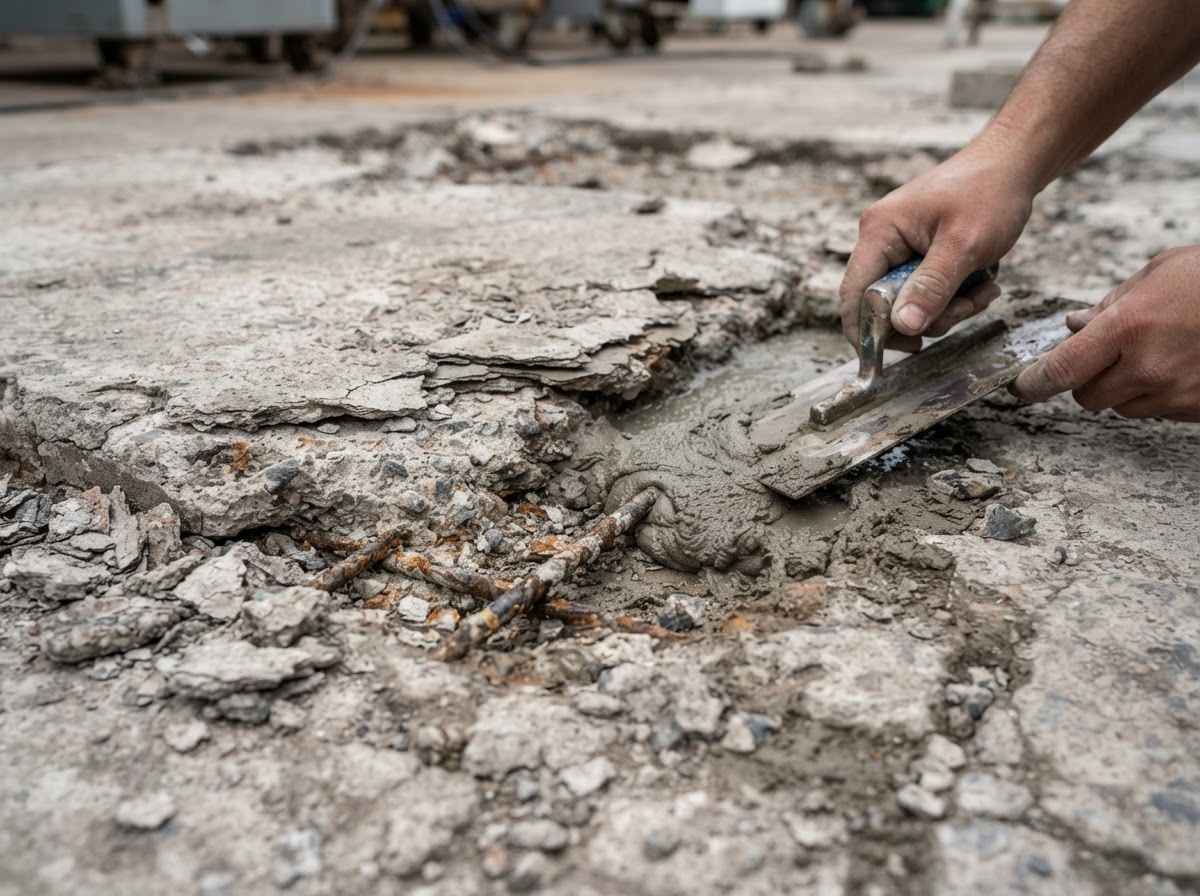
Surface scaling is the flaking off of the thin top mortar skin (1/16 to 1/4 inch deep), exposing underlying aggregate. Spalling refers to deeper popouts and detachment of larger concrete fragments, often triggered by corroding steel rebar or deep water saturation.
How Deicing Salts Affect Concrete
Chemical deicers lower the freezing point of water to melt ice, but they also intensify freeze-thaw stress on concrete surfaces:
Deicing Compound Characteristics
- Sodium Chloride (Rock Salt / NaCl): Inexpensive and effective down to ~15°F. Increases surface saturation and moisture absorption, accelerating physical scaling on unsealed or young concrete.
- Calcium Chloride (CaCl2): Effective down to -25°F. Melts ice rapidly through an exothermic reaction, but creates sudden thermal shock on frozen concrete surfaces.
- Magnesium Chloride (MgCl2): Effective to ~0°F. Less harsh on vegetation, but can react chemically with calcium silicate hydrate in concrete paste over time.
- Potassium Chloride (KCl): Effective down to ~25°F. Slower acting, gentle on plants, but still induces physical freeze-thaw cycles.
- Ammonium Nitrate / Ammonium Sulfate: HIGHLY DESTRUCTIVE. Commonly found in fertilizers, these chemicals severely attack concrete chemically and should NEVER be used as deicers.
Signs of Winter-Related Concrete Deterioration
Recognizing early signs of freeze-thaw damage allows homeowners to take corrective action before complete slab failure occurs:
Common Winter Deterioration Symptoms
- Surface Scaling & Flaking: Peeling of thin surface mortar layer, leaving rough aggregate exposed.
- D-Cracking & Edge Crumbling: Fine parallel cracking occurring along slab edges and joint lines.
- Popouts: Small conical fragments breaking away from the surface above weak aggregate particles.
- Joint Sump Failure: Breakdown of joint walls due to trapped salt water and ice expansion.
- Rust Staining & Spalling: Brown rust lines indicating corroding internal reinforcement pushing concrete outward.
Learn more on our dedicated spalling and crumbling repair service page.
Which Concrete Areas Are Most Exposed?
Outdoor flatwork zones in Gaithersburg experience varying levels of winter stress based on exposure and traffic:
1. Garage Entrances & Aprons
Vehicles track slush, road salt, and deicing chemicals into garage aprons and thresholds, where thermal melting and refreezing occur repeatedly.
2. Front Entry Steps & Walkways
Steps and entry paths receive high concentrations of manual salt application for safety, making them prime candidates for surface scaling.
3. Low-Lying Driveway Low Spots & Gutters
Slabs with poor slope accumulate standing meltwater that re-freezes overnight, accelerating edge cracking.
Reducing Winter Concrete Damage
Winter Protection Checklist
- Use Sand for Traction: Substitute coarse sand or cat litter instead of chemical deicing salts whenever possible.
- Avoid Deicers on New Concrete: Never apply chemical deicers to concrete placed within the preceding 12 months.
- Seal Exterior Concrete: Apply a penetrating silane-siloxane sealer to block water absorption while allowing water vapor to escape.
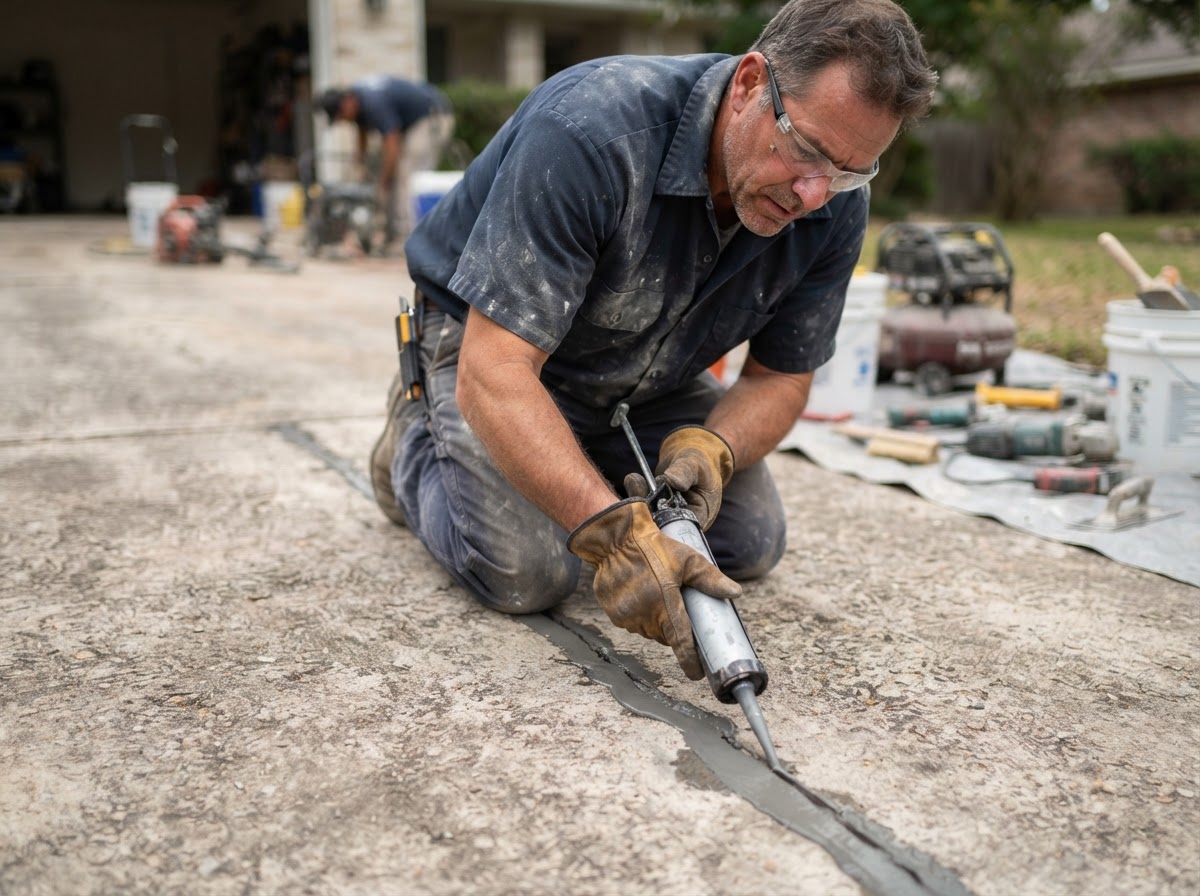
- Seal Expansion Joints: Fill open joints and cracks with elastomeric polyurethane sealant before winter to keep water out.
- Shovel Promptly: Remove snow and slush quickly before it melts and refreezes into ice sheets.
Evaluating Winter Damage
If your driveway or patio shows widespread scaling or cracking after winter, consult Gaithersburg Concrete to evaluate whether resurfacing, crack sealing, or section replacement is appropriate. Read our repair vs. replacement decision guide for a full framework.
Discuss Your Concrete Project
Have questions about scope, timing, or whether repair or replacement is the right call? We are happy to review your project and provide a clear, honest estimate.
Freeze-Thaw & Deicing FAQs
Why does concrete surface flaking or scaling happen after winter?
Surface scaling occurs when saturated concrete freezes, creating internal hydraulic pressure that breaks off the thin top mortar skin. It is aggravated by chemical deicers, poor air entrainment, excessive finishing water, or lack of proper curing.
Can road salt damage a concrete driveway?
Yes. Deicing salt lowers the freezing point of water, increasing the frequency of freeze-thaw cycles and keeping concrete critically saturated. Salt also accelerates rust corrosion on internal steel rebar.
Why does concrete spall near garage doors?
Cars track melted slush containing concentrated road salt into garage thresholds. The combination of standing salt water, wheel pressure, and indoor-outdoor temperature transitions makes this area highly vulnerable.
Does penetrating sealer protect concrete from freeze-thaw damage?
Yes. High-quality penetrating silane-siloxane sealers absorb into concrete pores, creating a hydrophobic water-repellent barrier that reduces water absorption by up to 90% while allowing internal moisture vapor to escape.
Can scaled concrete be repaired without replacing the slab?
If the underlying concrete slab remains structurally sound and stable, minor surface scaling can often be restored using a polymer-modified concrete overlay or resurfacing treatment.
What is the safest ice melt for concrete?
Coarse sand is the safest option because it provides immediate traction without chemical action or freeze-thaw intensification. If deicers are required, calcium magnesium acetate (CMA) or potassium chloride are less aggressive than pure rock salt.
Should I seal concrete cracks before winter?
Yes. Sealing open cracks and expansion joints with elastomeric polyurethane sealant before winter prevents meltwater from entering beneath the slab, where freezing causes heaving and edge breakdown.
Is Winter Weather Damaging Your Outdoor Concrete?
Gaithersburg Concrete provides expert evaluation, crack sealing, spalling repair, resurfacing, and durable replacement for winter-damaged concrete in Gaithersburg and Montgomery County. Call (240) 690-6035 or request a free estimate.
Keep Learning About Concrete in Gaithersburg
How Long Does Concrete Take to Cure in Maryland?
How concrete setting, curing, and strength gain work in Maryland, plus timelines for walking, driving, and placing equipment.
Read the guideConcrete Repair vs. Replacement: How to Decide
A decision framework for repairing or replacing damaged concrete in Gaithersburg — cracking, settlement, spalling, movement and slab condition.
Read the guideConcrete Resurfacing vs. Replacement
When a stable slab can be resurfaced and when replacement is the better call — cracking, stability, surface damage and slab movement in Gaithersburg.
Read the guideRelated Concrete Services Near Gaithersburg
Spalling, Flaking & Crumbling Concrete Repair
Repair of spalling, flaking, scaling, and crumbling concrete surfaces on driveways, patios, and walkways.
Learn moreConcrete Repair & Crack Repair
Targeted structural crack filling, spalling remediation, and damaged section patching to extend concrete longevity.
Learn moreConcrete Crack Repair & Expansion Joint Repair
Repair of concrete cracks, control joints, expansion joints, and gaps between slabs on driveways, patios, and walkways.
Learn moreConcrete Sealing & Waterproofing
Surface sealing and water-repellent treatments for driveways, patios, stamped concrete, and other suitable surfaces.
Learn moreConcrete Resurfacing & Concrete Overlays
Restorative polymer-modified micro-toppings and decorative cement overlays for structurally sound yet worn concrete.
Learn moreIs Winter Weather Damaging Your Outdoor Concrete?
Gaithersburg Concrete provides expert evaluation, crack sealing, spalling repair, resurfacing, and durable replacement for winter-damaged concrete in Gaithersburg and Montgomery County. Call (240) 690-6035 or request a free estimate.
- Project-specific estimates — no obligation
- Residential and commercial concrete work
- Serving Gaithersburg and surrounding Montgomery County
Request a Free Estimate
Tell us about your concrete project in Gaithersburg or nearby.