Concrete Patio Extensions in Gaithersburg, MD
An existing concrete patio can often be expanded by adding new concrete beside or around the existing slab, provided the layout, drainage, elevation, and the connection between old and new concrete are planned correctly. In Gaithersburg, homeowners extend patios to add seating, dining, grill space, or a lounge area as the way they use the backyard changes. Gaithersburg Concrete plans each extension around the existing patio's elevation, the yard's drainage, and how the new concrete will meet the old — because a patio extension is not just more square footage, it is a transition that has to drain, match, and hold up alongside the slab that is already there. Where the layout calls for a structure over the new area, the extension can coordinate with outdoor kitchen, gazebo, or hot tub pads planned for the same space.
Request a Free Estimate
Tell us about your concrete project in Gaithersburg or nearby.
Concrete Patio Extensions in Gaithersburg
A patio extension adds new concrete beside or around an existing patio to create more usable outdoor-living space. Rather than tearing out a sound slab and starting over, an extension builds outward from what is already there — adding width, depth, or a connected activity zone — when the existing patio is in usable condition and the goal is simply more room.
The planning that makes an extension work is in the details most homeowners do not see: matching the elevation of the new concrete to the old, planning drainage so water does not pool at the seam or run toward the house, designing the joint or transition between old and new, and accounting for how the new surface will weather next to concrete that has already aged. Get those right and the extension feels like part of the original patio; get them wrong and you get a visible lip, standing water, or a finish that never matches.
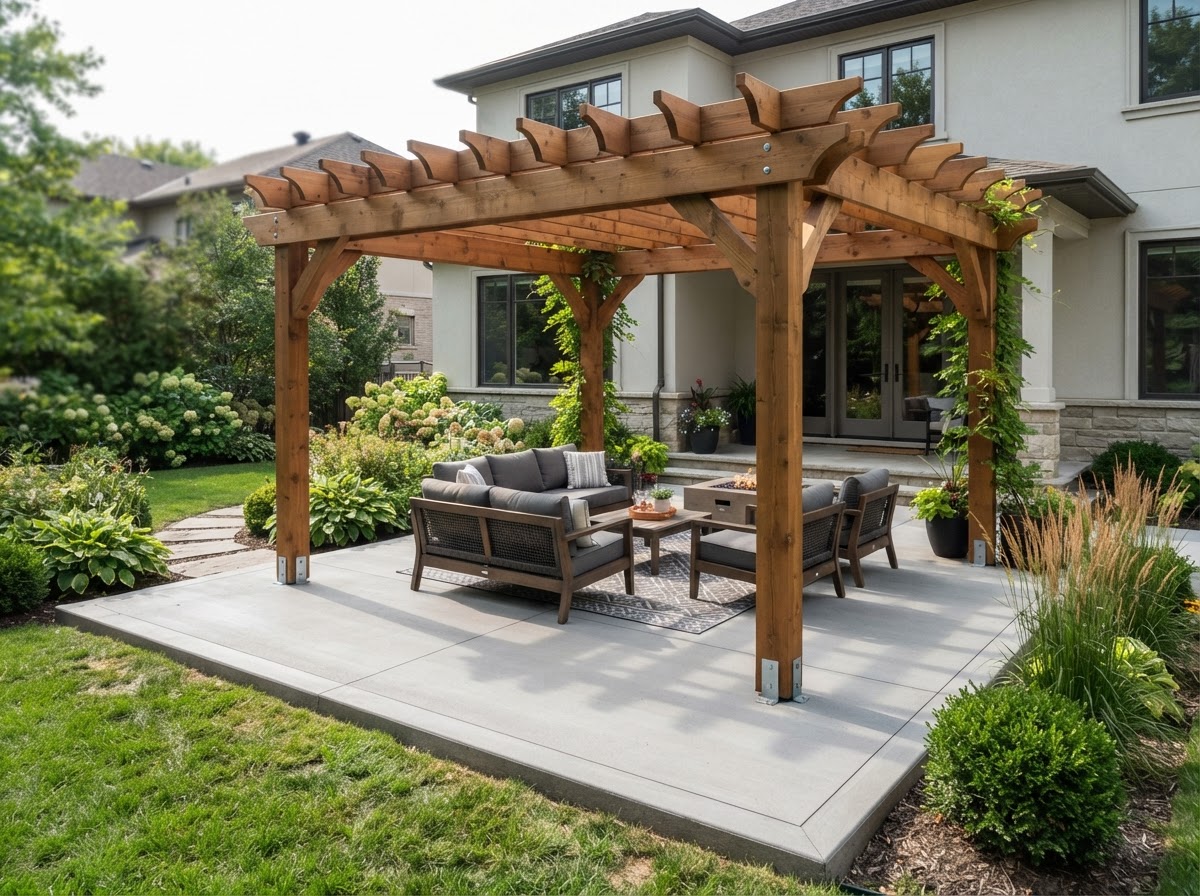
Common reasons to extend a patio include more seating, outdoor dining, a grill area, lounge space, a connection to a walkway, room for an outdoor kitchen, space beneath a pergola or gazebo, or a pad for a hot tub. Where the extension supports a structure, the slab can be coordinated with that structure's loads and anchor points rather than poured as an afterthought.
Ways to Expand an Existing Patio
A patio can be extended in several directions depending on the yard, the existing slab, and how the space will be used. The right approach depends on what you are trying to add and where there is room to add it.
Common Extension Types
- Side extension — add width beside the existing slab to widen the usable area.
- Depth extension — extend the patio farther into the yard or outdoor area.
- L-shaped or connected expansion — create separate activity zones tied together by concrete.
- Walkway connection — connect the patio to the driveway, side yard, entry, or a detached structure.
- Specialty area — coordinate the extension with an outdoor kitchen pad, gazebo or pergola pad, or hot tub pad.
The new slab does not need to be structurally bonded to the old one. In most cases the connection is a designed joint or transition that accommodates the different age, condition, and movement of the two pours. How that joint is detailed depends on the project conditions — the elevations, the finish, and whether a clean separation or a tied-together surface is the goal.
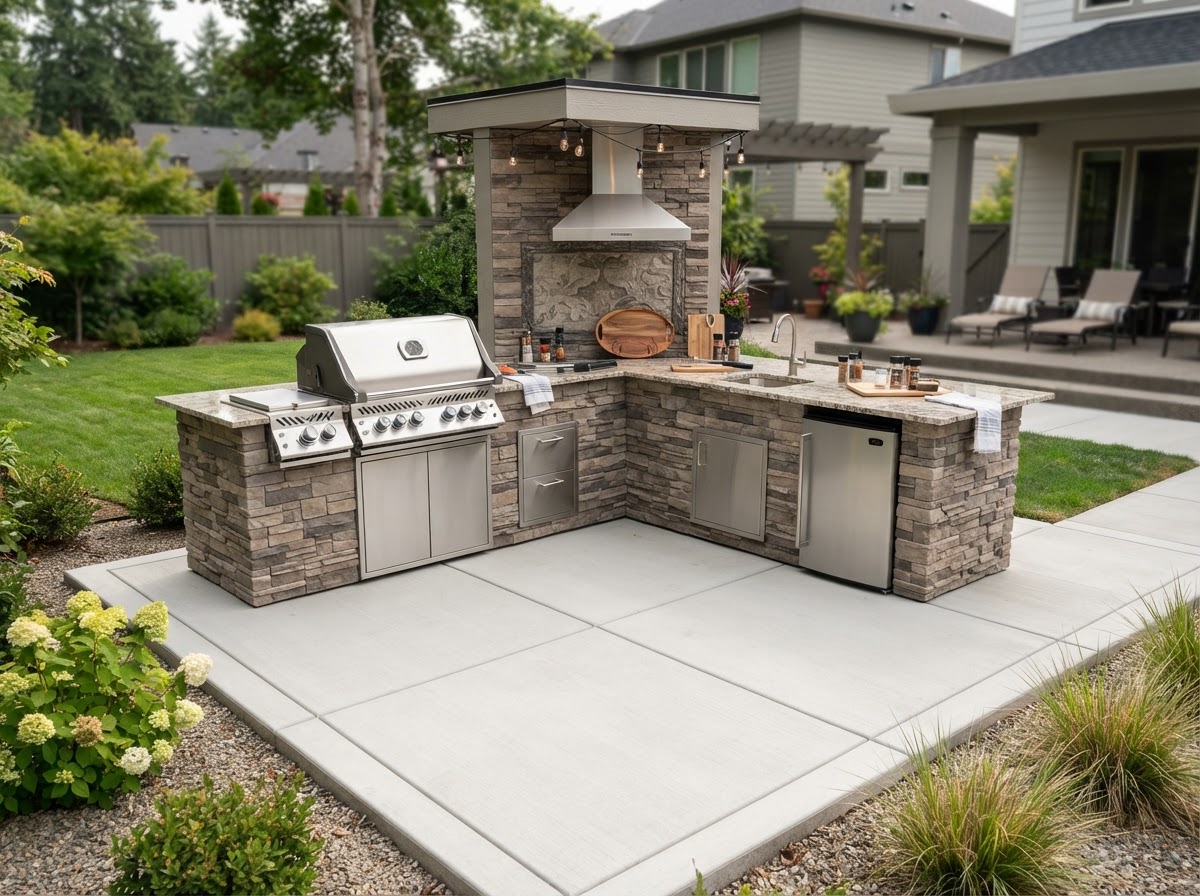
Where the extension will carry a structure, the layout accounts for post locations, equipment footprints, and utility penetrations so the slab is built for what goes on top of it, not just the square footage. An outdoor kitchen, for example, changes the loads and utility requirements of the slab beneath it.
Patio Extension Planning & Installation
A patio extension follows the same structural steps as any new concrete pour, with added attention to how the new work meets the existing slab. The preparation underneath is what makes the extension hold up alongside the original.
- 1Inspect the existing patio — assess condition, elevation, drainage, and how the new concrete will meet it.
- 2Define intended use — confirm what the added space is for so the size, layout, and finish fit the purpose.
- 3Measure the extension area — lay out the footprint, dimensions, and connections.
- 4Evaluate elevations — plan how the new concrete meets the existing slab and the surrounding grade.
- 5Plan drainage — set the slope so water sheds away from the house and off the patio, not into the seam.
- 6Evaluate access — confirm equipment and material access to the work area.
- 7Excavation — remove soil to the depth needed for base and slab.
- 8Base preparation — add and compact base material for a stable, well-drained foundation.
- 9Forming — set forms to the final shape, size, and elevation.
- 10Reinforcement where appropriate — add reinforcement suited to the patio's expected loads and conditions.
- 11Concrete placement — pour and screed the concrete to a consistent level.
- 12Finishing — apply the chosen texture and finish.
- 13Joint planning — place control joints and plan the transition between old and new concrete.
- 14Curing — allow the concrete to gain strength under appropriate conditions before use.
Matching the new concrete to the old is one of the harder parts of an extension. New concrete will not perfectly match older, weathered concrete in color, texture, or aggregate appearance, and we are straightforward about that. Where an exact match is unrealistic, a deliberate border or finish transition can make the difference look intentional rather than accidental.
Matching Old & New Concrete
Because the existing patio has weathered and the new concrete has not, forcing an exact visual match is often unrealistic. The more reliable approach is to plan the transition deliberately so the difference reads as design rather than as a mismatch.
Transition Approaches
- Broom finish — match the existing texture as closely as practical for a simple, consistent surface.
- Stamped concrete — carry a decorative pattern across the extension or use it to define the new zone.
- Exposed aggregate — match or contrast the aggregate finish depending on the existing surface.
- Decorative borders — frame the extension or the seam with a contrasting band that makes the transition intentional.
- Intentional contrast — let the new section read as a distinct zone rather than trying to hide the difference.
- Transition joints — design the joint between old and new to accommodate movement and finish changes.
Older concrete has weathered, and new concrete starts fresh. A border or finish transition can turn that unavoidable difference into a deliberate design choice, which usually looks better than a forced match that never quite gets there. Where the extension will carry a decorative finish, our stamped concrete patios page covers pattern and color options for new decorative surfaces.
Comparing finishes? See our stamped concrete vs. pavers guide and patio cost guide.
Drainage, Grade & Outdoor-Living Planning
Drainage is the part of a patio extension that most often gets overlooked and causes the most problems. The new concrete has to shed water away from the house and off the patio, and the seam where old meets new is a natural place for water to collect if the elevations and slope are not coordinated. A patio that ponds at the transition or sends runoff toward the foundation is an extension that did not get the planning it needed.
Grade and elevation matter at every edge. Where the extension meets the house or foundation, the interface has to direct water outward. Where it meets the lawn or landscaping, the edge has to shed cleanly without trapping runoff. Downspouts, walkway transitions, and the existing patio's elevation all factor into how the new slab is set. We do not publish universal drainage percentages — the right slope depends on the site, the surrounding grade, and the project conditions.
In Gaithersburg, freeze-thaw cycles and snowmelt add to the drainage load on an outdoor slab, so the base, slope, and joint planning that make any patio perform matter just as much for an extension. A well-prepared extension drains correctly, matches the existing elevation, and holds up alongside the original slab through Montgomery County seasons.
Related resources: drainage and water management guide and concrete curing guide.
Planning to make an existing patio larger? Discuss layout, drainage, and finish options with a project-specific evaluation.
Discuss Your Concrete Project
Have questions about scope, timing, or whether repair or replacement is the right call? We are happy to review your project and provide a clear, honest estimate.
Concrete Patio Extension FAQs & Estimates
Can an existing concrete patio be extended?
Yes, in most cases. A sound existing patio can be expanded by pouring new concrete beside or around it, provided the layout, elevation, drainage, and the transition between old and new concrete are planned correctly. We inspect the existing slab's condition and plan the extension around how the new concrete will meet it and drain.
Will new concrete match the old patio?
Not perfectly. New concrete will not exactly match older, weathered concrete in color, texture, or aggregate appearance. We are straightforward about that. Where an exact match is unrealistic, a deliberate border, finish transition, or intentional contrast can make the difference look like a design choice rather than a mismatch.
Can a stamped patio be extended?
Yes. A stamped patio can be extended by carrying the same pattern and color across the new section, or by using the extension to define a separate decorative zone. Matching an existing stamped finish is approximate rather than exact, and a border or transition can help tie the old and new surfaces together.
Can a patio extension include an outdoor kitchen?
Yes. Where the extension will support an outdoor kitchen or grill station, the slab can be planned around the equipment loads, utility penetrations, and layout rather than poured as plain square footage. See our concrete outdoor kitchen and grill pads page for the structural planning that goes with it.
Can a patio be extended around a pergola or gazebo?
Yes. Where the extension will sit beneath or around a shade structure, the slab can be coordinated with the post and anchor locations so the structure has a stable base. See our concrete gazebo and pergola pads page for planning a slab that supports a backyard structure.
Does patio expansion require removing the existing slab?
Usually no. The point of an extension is to keep the existing patio and add to it, so the original slab typically stays in place. If the existing patio is badly damaged, poorly drained, or at the wrong elevation, replacement may make more sense than an extension — we assess the existing slab before recommending which approach fits.
What affects patio extension cost?
Cost depends on the added square footage, site access and excavation, base preparation, reinforcement, the finish selected, drainage work, whether the extension supports a structure, and how the new concrete meets the existing slab. Because every yard and existing patio differs, we provide project-specific estimates rather than fixed per-square-foot rates.
Request a Concrete Patio Extension Estimate
Ready to make your existing patio larger? Gaithersburg Concrete will review the layout, drainage, and finish options for your extension. Call (240) 690-6035 or request a free estimate.
Related Concrete Services Near Gaithersburg
Concrete Patio Installation & Replacement
Custom concrete backyard patios engineered for outdoor living, cookouts, and year-round family entertainment.
Learn moreStamped Concrete Patios
Stamped concrete patio installation with decorative patterns, color, and texture for new backyard patio surfaces.
Learn moreConcrete Outdoor Kitchen & Grill Pads
Concrete pads for outdoor kitchens, grill stations, and BBQ areas planned around equipment loads, drainage, and utility penetrations.
Learn moreConcrete Gazebo & Pergola Pads
Concrete pads for gazebos, pergolas, and pavilions sized to the structure and coordinated with post and anchor locations.
Learn moreRequest a Concrete Patio Extension Estimate
Ready to make your existing patio larger? Gaithersburg Concrete will review the layout, drainage, and finish options for your extension. Call (240) 690-6035 or request a free estimate.
- Project-specific estimates — no obligation
- Residential and commercial concrete work
- Serving Gaithersburg and surrounding Montgomery County
Request a Free Estimate
Tell us about your concrete project in Gaithersburg or nearby.