Concrete Gazebo & Pergola Pads in Gaithersburg, MD
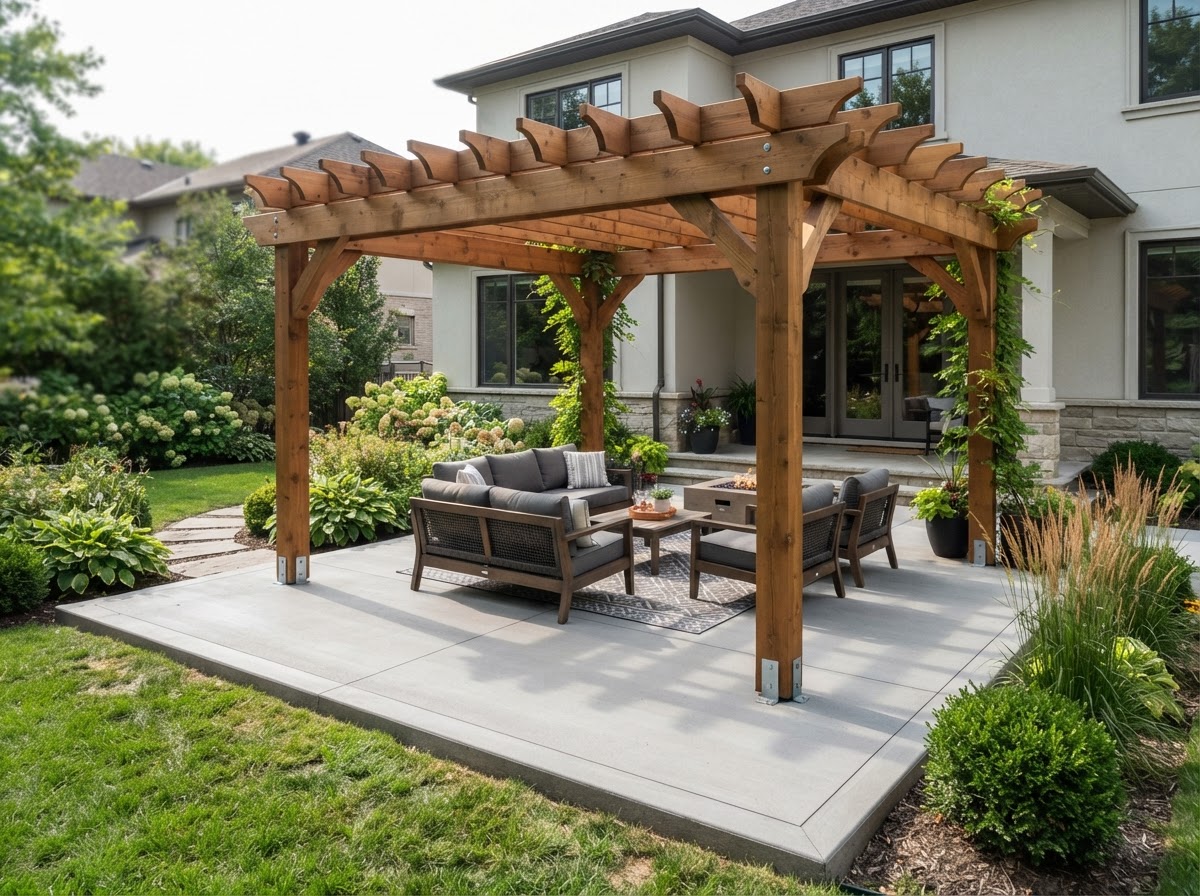
A concrete pad gives a gazebo, pergola, or pavilion a flat, stable surface to rest on and a solid base for the structure's posts and anchors. Gaithersburg Concrete pours gazebo and pergola pads sized to the structure footprint, coordinated with post and anchor locations, and finished for seating, foot traffic, and outdoor entertaining. Because a backyard structure pad carries the structure above it, the furniture and people on it, and full weather exposure, the base, drainage, and finish are all planned around those loads. Every gazebo or pergola pad starts with a review of the structure dimensions, manufacturer requirements, and how the pad fits the surrounding yard.
Request a Free Estimate
Tell us about your concrete project in Gaithersburg or nearby.
Concrete Pads for Gazebos & Pergolas in Gaithersburg
A gazebo or pergola pad is the concrete slab that sits beneath a backyard shade structure, giving it a flat, clean, stable surface to rest on and a solid base for the posts and anchors that hold it down. In Gaithersburg, where gazebos, pergolas, and pavilions are common additions to a patio or lawn, a poured pad turns a structure that would otherwise sit on grass or gravel into a usable, low-maintenance outdoor room.
These pads serve a few kinds of structures. Gazebos are typically freestanding roofed structures with full or partial sides. Pergolas are open-air frames with slatted or lattice roofs that provide partial shade. Pavilions are larger roofed structures, often over a seating or dining area. Each places different loads on the slab and has different post and anchor requirements, and the pad is planned around the specific structure.
What the pad provides is a stable surface for furniture and foot traffic underneath the structure, a clean finished area that does not turn muddy or rutted, and a base that accepts the structure's posts and anchors the way the manufacturer or design requires. A gazebo sitting on a level concrete pad stays square and usable; the same gazebo on settling soil twists and sags over time. That is the difference a poured pad makes.
Why Use Concrete Under a Gazebo or Pergola?
Concrete under a gazebo or pergola solves the problems that grass, gravel, and bare soil create beneath a backyard structure. The slab gives the structure a stable base, gives the space beneath it a clean usable surface, and carries the furniture and foot traffic that the shaded area attracts.
What a Concrete Pad Provides
- A stable, level surface for the structure to rest on
- A clean finished area for seating, dining, or entertaining under the shade
- Furniture that sits level rather than sinking into soft ground
- Foot traffic that does not turn the area muddy or worn
- Structure anchoring considerations — a solid base for posts and anchors where the design requires
- Drainage planned so water sheds away from the structure and the slab
- A low-maintenance use area that does not need mowing or regrading
We do not say every gazebo or pergola requires concrete. A light, freestanding pergola on a lawn can be fine without a pad, and some structures are designed to sit on the ground or on pier blocks. A concrete pad becomes the right choice when the space beneath the structure will be used for seating or dining, when the structure is large or heavy, when the soil is soft or poorly drained, or when the goal is a clean, finished outdoor room rather than a structure on the lawn. We help you decide based on the actual structure and use.
Gazebo & Pergola Pad Installation Process
A gazebo or pergola pad is poured like other flatwork, with the structure dimensions, post locations, and manufacturer requirements planned up front so the finished slab accepts the structure exactly where it should. Coordinating the slab and the post and anchor layout before the pour is what keeps everything lined up.
- 1Structure dimensions — confirm the gazebo or pergola footprint and any overhang.
- 2Manufacturer requirements — review the structure specs for post locations, anchors, and base details.
- 3Layout — mark the pad dimensions and post locations on the site.
- 4Post locations — confirm where each post bears on or ties into the slab.
- 5Site preparation — clear and grade the area where the pad will sit.
- 6Excavation — remove soil to the depth needed for base and slab.
- 7Base — add and compact base material for a stable foundation.
- 8Forms — set forms to the pad dimensions, thickness, and edges.
- 9Reinforcement where appropriate — add reinforcement suited to the structure and use loads.
- 10Placement — pour and screed the concrete to a consistent level.
- 11Finish — apply a finish suited to the use, from broom to decorative.
- 12Curing — allow the concrete to gain strength before the structure or furniture use the pad.
Coordinating the slab dimensions and the post and anchor locations before pouring is what makes the structure fit. A pad poured to the wrong footprint, or without the post locations accounted for, leaves the structure sitting awkwardly or the anchors landing in the wrong spot. We confirm the structure dimensions and post layout against the slab before any concrete is placed.
Slab Size, Footings, Anchors & Finish Options
A gazebo or pergola pad is sized and detailed around the structure it supports and the use it serves. The footprint has to fit the structure, the posts have to land where the design puts them, and the finish has to work for seating, dining, or whatever happens underneath.
Size, Footing, Anchor & Finish Considerations
- Structure footprint and whether the pad matches it or extends beyond
- Overhang and clearance so the roof does not drip beyond the slab edge
- Seating area and how much room the pad gives around the furniture
- Post loads and how the structure's weight transmits to the slab
- Anchoring — post bases, brackets, or anchors per the structure design
- Footings where required for the structure or the post loads
- Drainage so water sheds away from the structure and the slab
- Patio integration where the pad connects to a larger paved area
- Broom finish for a practical surface or decorative finishes for a higher-end look
We do not prescribe structural footing sizes. Where the gazebo or pergola design calls for dedicated footings at the posts — because of the structure's size, wind exposure, or the manufacturer requirements — those footings are coordinated with the structure design and the applicable requirements, not invented by us. Final slab, footing, anchor, or reinforcement requirements may depend on approved plans, manufacturer specifications, or applicable project requirements, and we build to those rather than guessing a dimension.
For the patio a gazebo or pergola often extends, see our concrete patio installation services and our general-purpose concrete slabs, pads and foundations page. Structural support under backyard structures is covered in our concrete footings and addition foundations services, and decorative surfaces under a gazebo in our stamped and decorative concrete work.
Planning Backyard Structure Concrete in Maryland
A gazebo or pergola pad in Gaithersburg sits in the yard and takes the full combination of freeze-thaw, runoff, and the moisture a backyard structure deals with. The pad is surrounded by lawn, exposed to roof runoff from the structure above it, and subject to the snow and freeze-thaw cycles that stress any exterior concrete in Montgomery County.
Site grading and drainage are what keep the pad stable. A slab set in a low spot of the yard traps runoff and settles; a pad graded to shed water stays level and dry. The surrounding lawn, the structure's roof runoff, and the site's natural drainage all factor into how the pad is elevated and sloped, and we plan the slab around the actual yard rather than dropping a pad into a low spot.
Snow that piles against the structure and the slab melts and refreezes against the concrete, and the maintenance around a gazebo or pergola — moving furniture, sweeping, cleaning — happens on the slab surface. A pad that drains, sits at the right grade relative to the lawn, and is finished for the actual use holds up where a poorly placed pad heaves and cracks. Over time, the difference between a pad planned for the yard and one poured without regard to the site shows up as level, usable concrete versus a settled, tilting structure.
Gazebo Pad vs. Patio
A gazebo pad and a patio overlap but are not the same thing. A gazebo pad is sized to the structure — a slab beneath the gazebo or pergola, planned around the posts and the use directly underneath. A patio is a broader outdoor living surface that may or may not have a structure on it. Many projects combine both — a full patio with a gazebo or pergola integrated into one pour — where the structure sits on the patio slab and the surrounding surface extends out for seating and dining. We help you decide whether a dedicated structure pad, a full patio, or a combination fits the project rather than pouring more concrete than the scope needs.
Discuss Your Concrete Project
Have questions about scope, timing, or whether repair or replacement is the right call? We are happy to review your project and provide a clear, honest estimate.
Gazebo & Pergola Concrete Pad FAQs & Free Estimates
Does a gazebo need a concrete slab?
A gazebo does not strictly require a concrete slab, but one gives it a stable, level base, a clean usable surface underneath, and a solid foundation for the posts and anchors. A gazebo on a poured pad stays square and usable where the same structure on soft soil can settle and twist. Whether a slab is right depends on the gazebo size, the soil, and how the space will be used.
Can a pergola be anchored to concrete?
Yes. A pergola can be anchored to a concrete pad using post bases, brackets, or anchors set into the slab per the structure design and manufacturer requirements. Anchoring to a poured pad is often more stable than setting posts in soil. We plan the anchor locations and the slab together so the posts land where the design puts them.
How thick should a gazebo pad be?
Gazebo pad thickness depends on the structure weight, the post loads, the furniture and foot traffic the slab will carry, and the base conditions. A larger, heavier gazebo with seating underneath needs more thickness than a light pergola. We recommend thickness based on the specific structure and use rather than a universal dimension.
Should a concrete pad be larger than the gazebo?
Often yes. A pad that extends beyond the gazebo footprint gives a usable seating or walking area around the structure and keeps the roof from dripping just off the slab edge. How much larger depends on the structure's overhang, the intended use, and the yard. We size the pad to the structure plus the surrounding use area rather than matching the footprint exactly.
Does a pergola pad need footings?
It depends on the structure. Some pergolas transmit post loads directly to the slab, while others require dedicated footings at the posts per the manufacturer specifications or applicable requirements. Where footings are required, they are coordinated with the structure design. We do not invent footing dimensions — we build to what the specific pergola and project require.
Can stamped concrete be used under a gazebo?
Yes. A gazebo or pergola pad can be finished with a broom texture for a practical surface or with stamped, colored, or decorative concrete for a higher-end look that reads as an outdoor room. Decorative finishes are coordinated with any connecting patio so the structure and the surrounding surface look like one design. See our stamped and decorative concrete services for the options.
What affects the cost of a gazebo concrete pad?
Cost depends on the pad dimensions, slab thickness, reinforcement, whether footings or post coordination are involved, finish type, drainage work, excavation and base preparation, and site access. A larger decorative pad with footings costs more than a small plain pad. We provide project-specific estimates based on the actual structure and scope.
Request a Gazebo or Pergola Pad Estimate
If you need a concrete pad for a gazebo, pergola, or pavilion in Gaithersburg, Gaithersburg Concrete will review the structure dimensions, post and anchor requirements, and drainage, then provide a clear estimate. Serving Gaithersburg and surrounding Montgomery County communities.
Related Concrete Services Near Gaithersburg
Concrete Patio Installation & Replacement
Custom concrete backyard patios engineered for outdoor living, cookouts, and year-round family entertainment.
Learn moreConcrete Slabs, Pads & Foundations
Heavy-duty concrete pads for backyard sheds, hot tubs, HVAC units, backup generators, and residential accessory structures.
Learn moreConcrete Footings & Addition Foundations
Concrete footings and foundation concrete for home additions, porches, and small structures.
Learn moreStamped & Decorative Concrete
Premium slate, cobblestone, stone, and wood-plank patterns combined with integral colors and protective sealants.
Learn moreRequest a Gazebo or Pergola Pad Estimate
If you need a concrete pad for a gazebo, pergola, or pavilion in Gaithersburg, Gaithersburg Concrete will review the structure dimensions, post and anchor requirements, and drainage, then provide a clear estimate. Serving Gaithersburg and surrounding Montgomery County communities.
- Project-specific estimates — no obligation
- Residential and commercial concrete work
- Serving Gaithersburg and surrounding Montgomery County
Request a Free Estimate
Tell us about your concrete project in Gaithersburg or nearby.