Concrete Shed Pads & Storage Building Slabs in Gaithersburg, MD
A concrete shed pad provides the stable, level surface that a storage shed or small outbuilding rests on, and Gaithersburg Concrete pours shed slabs and storage building pads for properties in Gaithersburg, Maryland and surrounding service areas. A well-built shed pad keeps the structure level, separates it from ground moisture, and provides a clean, durable interior base. Every shed slab project starts with a review of the shed dimensions, manufacturer requirements, site access, and yard drainage, because the right thickness, reinforcement, and base depend on the size and intended use of the structure. We do not claim concrete is mandatory for every shed — but where a stable, long-lasting base is the goal, a poured slab is a practical foundation.
Concrete Shed Pads in Gaithersburg
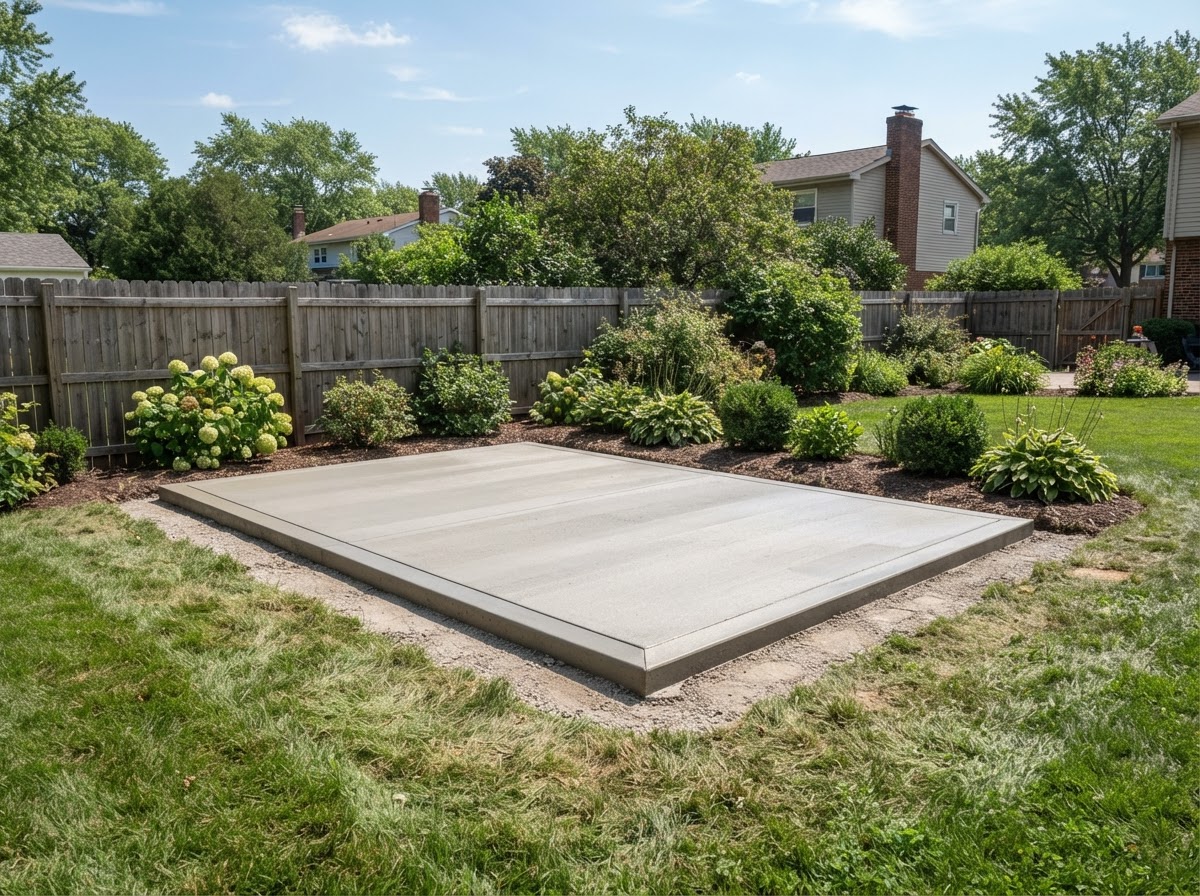
A concrete shed pad is a poured slab sized to the footprint of a storage shed, garden structure, or small outbuilding. It provides a flat, level surface that the structure rests on, keeping the floor off the soil and creating a clean, durable base for storage and access.
Sheds and storage buildings are common across Gaithersburg properties — for lawn equipment, seasonal storage, garden tools, and small workshops. A pad built to the right dimensions and thickness keeps the structure stable and prevents the settling, tilting, and moisture problems that come with placing a shed directly on the ground or on an inadequate base.
Because a shed pad is sized to the structure it supports, the planning phase — shed dimensions, manufacturer requirements, site access, and yard conditions — matters as much as the pour itself. A pad built for the wrong size or over an unprepared base will settle or crack under the structure.
Why Use a Concrete Slab for a Shed or Storage Building?
A concrete slab offers several practical advantages as a shed foundation. It provides level support, durability, a clean interior base, and a stable surface for anchoring the structure. We do not claim concrete is mandatory for every shed — some structures use other foundation approaches — but where a long-lasting, level base is the goal, a poured slab is a reliable choice.
Advantages of a Concrete Shed Pad
- Level support that keeps the shed square and stable over time
- Durability that resists settling, tilting, and ground movement
- A clean interior base separated from soil and ground moisture
- Load support for stored items, equipment, or small workspaces
- Anchoring considerations for securing the structure to the slab
- Moisture separation that helps protect the shed floor from ground contact
- Ease of use — a smooth, clean surface for access and storage
A shed placed directly on soil or on an inadequate base can settle unevenly, tilt, and develop moisture problems at the floor. A concrete pad addresses these issues by providing a stable, level, moisture-separated foundation that keeps the structure sound for longer.
How a Concrete Shed Pad Is Installed
A shed pad pour follows the same fundamentals as any slab, with dimensions and thickness matched to the shed.
- 1Shed dimensions — confirm the pad size based on the shed footprint and any overhang.
- 2Site layout — mark the pad location, orientation, and elevation in the yard.
- 3Excavation — remove soil to the depth needed for base and slab.
- 4Subgrade preparation — compact the soil to a stable surface.
- 5Base — add and compact base material where appropriate.
- 6Forms — set forms to the pad dimensions and finished elevation.
- 7Reinforcement where appropriate — add reinforcement suited to the shed and loads.
- 8Placement — pour and screed the concrete to a consistent level.
- 9Finish — apply a finish suited to the shed's use.
- 10Curing — allow the slab to gain strength before the shed is placed.
Shed Pad Size, Thickness & Design Considerations
Shed pad requirements vary based on the shed size, manufacturer requirements, loads, base, and site conditions. There is no single mandatory universal thickness — the right slab is planned around the specific structure and how it will be used.
Planning Factors We Consider
- Shed size — the footprint and any roof overhang that extends beyond the walls
- Manufacturer requirements — specifications that come with a prefabricated shed
- Loads — the weight of the structure, stored items, and any equipment
- Base and soil conditions — what the slab will rest on
- Edge design — how the slab perimeter is formed and finished
- Anchoring — how the shed will be secured to the slab
- Local requirements — any specifications that may apply to the project
We do not give one mandatory universal thickness for every shed pad. For broader slab projects, our concrete slabs, pads, and foundations services cover general-purpose pours, and a connecting walkway can be planned alongside the pad through our concrete walkway services. A nearby patio may also be part of the yard layout, and existing pad damage can often be addressed through concrete repair.
Drainage & Site Planning for Shed Slabs
Yard drainage is one of the most important factors in how well a shed pad performs. A pad placed in a low spot or where runoff collects will sit in water, which undermines the base and can lead to settlement and moisture problems beneath the shed. Planning the pad elevation and the surrounding grade so water moves away from the slab is central to a durable installation.
Slope and water movement matter throughout Gaithersburg properties, where yards often slope toward fences, property lines, or neighboring lots. The finished slab elevation needs to account for the surrounding grade so the pad sits level while still shedding water. Freeze-thaw cycles add stress to the base through the seasons, and a poorly drained pad that shifts with the ground takes the shed with it.
Site access also affects how the pour is planned. Many shed pads are installed in backyards with limited equipment access, which shapes how the concrete is placed and finished. We account for access, surrounding grade, and yard drainage when planning a shed pad so the finished slab sits level, stable, and well-drained.
Discuss Your Concrete Project
Have questions about scope, timing, or whether repair or replacement is the right call? We are happy to review your project and provide a clear, honest estimate.
Concrete Shed Pad FAQs
Do sheds need a concrete pad?
Not every shed requires a concrete pad, but a poured slab provides a level, durable, moisture-separated foundation that helps prevent settling, tilting, and floor moisture problems. Where a stable, long-lasting base is the goal, a concrete pad is a practical choice. We do not claim concrete is mandatory for every shed.
How thick should a concrete shed slab be?
Shed slab thickness depends on the shed size, the weight of the structure and stored items, base conditions, and manufacturer requirements. A larger or heavier shed typically requires a thicker slab than a small storage structure. We recommend thickness based on the specific shed rather than applying one dimension universally.
Should the slab be the same size as the shed?
The slab is typically sized to the shed footprint, but roof overhangs and access needs can affect the final dimensions. Some property owners prefer a slightly larger pad to provide a clean edge or step-out area. We confirm the pad size based on the shed dimensions and how the structure will be used.
Does a shed slab need reinforcement?
Reinforcement is specified based on the shed size, loads, and project conditions. Some shed pads benefit from reinforcement to manage cracking and carry the structure's weight, while lighter sheds may not require it. We recommend reinforcement where appropriate to the specific project.
How long before a shed can be placed on new concrete?
A shed should not be placed on fresh concrete until the slab has gained enough strength to carry the structure's weight. Timing depends on the mix, weather, slab thickness, and the shed's load. We advise when the pad is ready for the shed to be placed before we finish the project.
Can you pour a shed pad in an existing backyard?
Yes. We pour shed pads in existing yards, accounting for site access, surrounding grade, and drainage. Backyard access often shapes how the pour is planned and executed, and we review those conditions during the estimate so the installation goes smoothly.
What affects the cost of a shed pad?
Shed pad cost depends on dimensions, thickness, reinforcement, excavation and base work, site access, and any demolition of existing concrete or structures. Larger or heavier-load pads that require more preparation cost more than small, light-use slabs. We provide project-specific estimates based on the actual scope.
Request a Concrete Shed Pad Estimate
Whether you need a slab for a new shed or a replacement pad for an existing structure, Gaithersburg Concrete will review the dimensions, site, and drainage, then provide a clear estimate. Serving Gaithersburg and surrounding Montgomery County communities.
Related Concrete Services Near Gaithersburg
Concrete Slabs, Pads & Foundations
Heavy-duty concrete pads for backyard sheds, hot tubs, HVAC units, backup generators, and residential accessory structures.
Learn moreConcrete Patio Installation & Replacement
Custom concrete backyard patios engineered for outdoor living, cookouts, and year-round family entertainment.
Learn moreConcrete Sidewalks, Walkways & Paths
Safe, level pedestrian access ways, garden paths, front walkways, and commercial footpaths built for heavy foot traffic.
Learn moreConcrete Repair & Crack Repair
Targeted structural crack filling, spalling remediation, and damaged section patching to extend concrete longevity.
Learn moreRequest a Concrete Shed Pad Estimate
Whether you need a slab for a new shed or a replacement pad for an existing structure, Gaithersburg Concrete will review the dimensions, site, and drainage, then provide a clear estimate. Serving Gaithersburg and surrounding Montgomery County communities.
- Project-specific estimates — no obligation
- Residential and commercial concrete work
- Serving Gaithersburg and surrounding Montgomery County
Request a Free Estimate
Tell us about your concrete project in Gaithersburg or nearby.