Concrete Generator Pads & Equipment Pads in Gaithersburg, MD
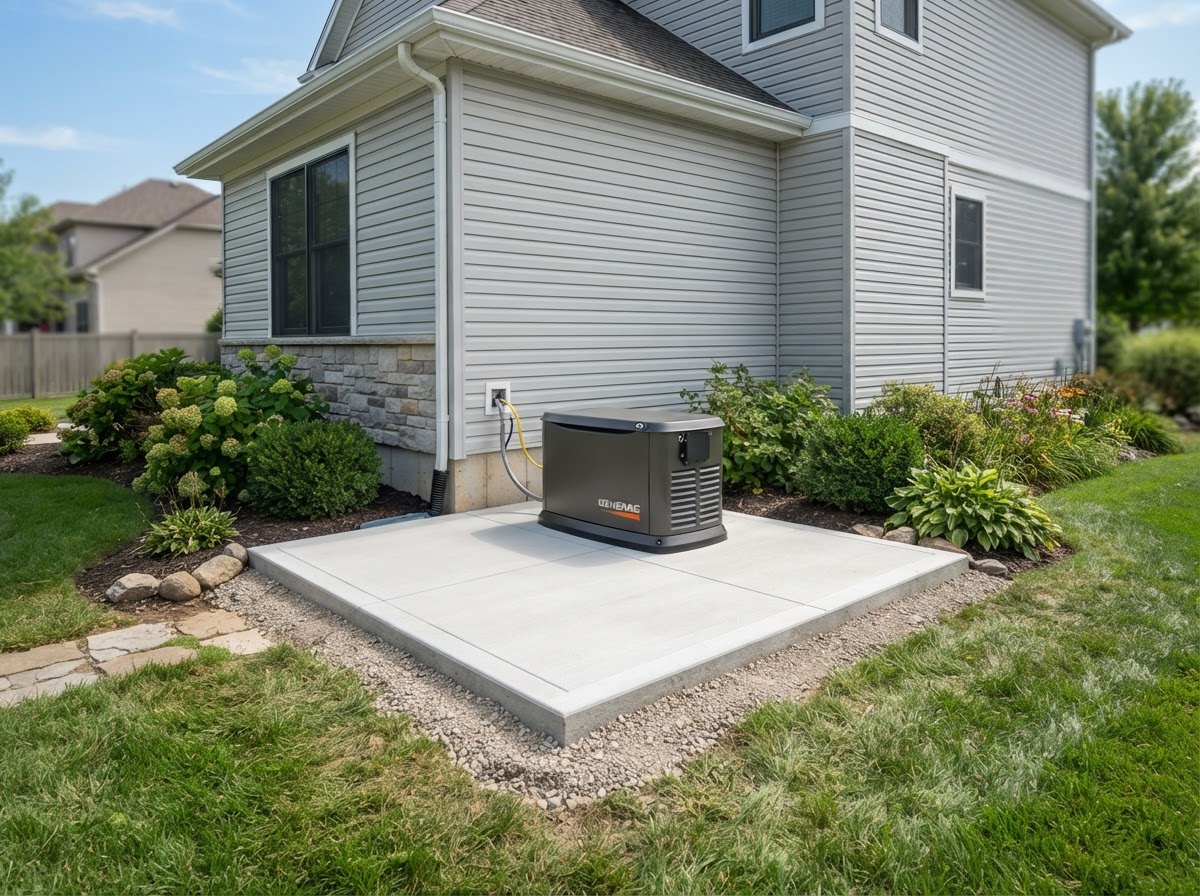
A concrete generator pad or equipment pad provides the stable, level surface that standby generators, HVAC units, and mechanical equipment rest on, and Gaithersburg Concrete pours equipment slabs for properties in Gaithersburg, Maryland and surrounding service areas. Equipment pads carry vibration, weight, and weather exposure, so the slab must be level, stable, and built to the equipment's footprint and load. Every equipment pad project starts with a review of the equipment specifications, dimensions, clearances, and utility coordination, because the right thickness, reinforcement, and base depend on the specific unit. We do not make manufacturer-specific claims — instead, we plan the pad around the equipment's requirements and the site conditions so the finished slab supports the unit reliably.
Concrete Generator & Equipment Pads in Gaithersburg
A generator pad or equipment pad is a poured concrete slab built to support standby generators, mechanical equipment, HVAC units, utility equipment, and commercial machinery. The pad provides a level, stable surface that keeps the equipment off the soil, distributes its weight, and resists the vibration and weather exposure that come with outdoor mechanical installations.
Standby generators and outdoor equipment are common across Gaithersburg residential and commercial properties, providing backup power and mechanical support. But the concrete beneath the equipment determines whether it stays level and stable over time. A pad that settles or cracks can throw the equipment out of alignment, create service access problems, and shorten the unit's service life.
Because equipment pads carry vibration, weight, and weather exposure, the planning phase — equipment specifications, dimensions, clearances, and utility coordination — is central to a successful installation. We plan the pad around the specific unit rather than applying one generic approach to every piece of equipment.
Why Equipment Needs a Stable Concrete Pad
Mechanical equipment needs a stable concrete pad because it provides level support, resists vibration, and stands up to the weather exposure that outdoor equipment faces. A generator or HVAC unit placed directly on soil or an inadequate base can settle, tilt, and transfer vibration into the surrounding structure, creating operational and maintenance problems.
Advantages of a Concrete Equipment Pad
- Level support that keeps equipment aligned and stable
- Capacity to carry the equipment's weight without settling
- Vibration considerations — a stable base that resists movement
- Clearance — a defined footprint with access for service
- Weather exposure resistance for outdoor installations
- Surface stability that holds up under the equipment's load
We do not make manufacturer-specific claims. Equipment manufacturers often specify minimum pad dimensions, thickness, and anchoring for their units, and the pad should be built to meet those requirements. We review the equipment specifications during the estimate so the slab is planned correctly for the specific unit.
How Concrete Equipment Pads Are Installed
An equipment pad pour follows the same fundamentals as any loaded slab, with dimensions and reinforcement matched to the unit.
- 1Equipment specifications — confirm the unit dimensions, weight, and manufacturer requirements.
- 2Dimensions — size the pad to the equipment footprint and required clearances.
- 3Loads — plan thickness and reinforcement for the equipment's weight.
- 4Site access — review how the equipment will be delivered and placed.
- 5Excavation — remove soil to the depth needed for base and slab.
- 6Base — add and compact base material for a stable foundation.
- 7Forms — set forms to the pad dimensions and finished elevation.
- 8Reinforcement if required — add reinforcement suited to the equipment load.
- 9Concrete placement — pour and screed to a consistent, level surface.
- 10Finish — apply a finish suited to the equipment installation.
- 11Curing — allow the slab to gain strength before equipment is placed.
Equipment Specifications & Pad Design
Equipment pad design centers on the manufacturer requirements, equipment footprint, and clearances. The thickness, reinforcement, and finished elevation are matched to the unit, while drainage and utility coordination ensure the pad supports the equipment correctly.
Design Considerations
- Manufacturer requirements — specifications that come with the equipment
- Equipment footprint — the pad size relative to the unit
- Clearances — required space around the equipment for service and airflow
- Anchoring — how the equipment will be secured to the pad
- Finished elevation — how the pad sits relative to surrounding grade
- Utility coordination — how electrical, fuel, or mechanical lines reach the unit
- Drainage — slope and grading that direct water away from the equipment
- Load requirements — the weight the slab must carry
For broader slab projects, our concrete slabs, pads, and foundations services cover general-purpose pours, and commercial concrete flatwork covers heavier-use and multi-unit applications. Connecting walkways provide access to the equipment area, and existing pad damage can often be addressed through concrete repair rather than full replacement.
Outdoor Equipment Pads & Maryland Weather
Outdoor equipment pads in Gaithersburg face water exposure, freeze-thaw cycles, and seasonal weather throughout the year. Equipment sits outside through every season, and the pad beneath it must resist the moisture, snow, and temperature swings that come with Maryland weather. Freeze-thaw cycles mean moisture that enters the concrete can expand as it freezes, stressing the slab and any existing cracks.
Soil and base movement contribute to how well an equipment pad performs over time. A pad placed over poorly compacted or eroding base material can settle, taking the equipment with it. Drainage around the pad matters because water that collects beneath or around the slab undermines the base and can affect the equipment's stability.
We do not claim concrete prevents equipment corrosion. The pad provides a stable, level surface, but the environment around outdoor equipment — moisture, salt, and weather — affects the equipment itself. Our focus is on building a pad that stays level and stable so the equipment has a reliable foundation, with drainage that helps manage water around the installation.
Discuss Your Concrete Project
Have questions about scope, timing, or whether repair or replacement is the right call? We are happy to review your project and provide a clear, honest estimate.
Generator & Equipment Pad FAQs
How thick should a generator pad be?
Generator pad thickness depends on the equipment's weight, manufacturer requirements, and base conditions. A standby generator places a concentrated load on the pad, so the slab is typically built to carry that specific weight. We recommend thickness based on the unit's specifications rather than applying one dimension universally.
Does a standby generator need a concrete pad?
A standby generator typically requires a stable, level surface to support the unit and resist vibration, and a concrete pad is the most common foundation. Manufacturer requirements often specify the pad dimensions and construction. We plan the pad around the specific generator's requirements and the site conditions.
Should the pad be larger than the generator?
The pad is typically sized to the equipment footprint plus any required clearance for service, airflow, and anchoring. Manufacturer requirements often specify minimum clearances. We confirm the pad size based on the unit dimensions and the access needed around the equipment.
Can HVAC equipment sit on concrete?
Yes, HVAC and mechanical equipment commonly sit on concrete pads that provide level support and resist the vibration and weather exposure of outdoor installations. The pad should be built to the equipment manufacturer's requirements for dimensions, thickness, and anchoring.
Does an equipment pad need reinforcement?
Reinforcement is specified based on the equipment weight, slab thickness, and manufacturer requirements. Because equipment places a concentrated load on the pad and may generate vibration, reinforcement is often appropriate to manage cracking and carry the load. We recommend reinforcement based on the specific unit and project.
Can you replace an existing equipment pad?
Yes. An existing equipment pad that has cracked, settled, or deteriorated can be removed and replaced. Replacement includes removing the old pad, preparing the base, and pouring a new slab planned for the equipment's requirements. We coordinate the timing so the equipment can be reinstalled on the new pad.
What affects equipment pad pricing?
Equipment pad cost depends on dimensions, thickness, reinforcement, excavation and base work, site access, and any demolition of an existing pad. A pad built for heavy equipment costs more than a light-use slab due to the additional preparation and reinforcement. We provide project-specific estimates based on the equipment's specifications.
Request an Equipment Pad Estimate
Need a pad for a generator, HVAC unit, or other equipment? Gaithersburg Concrete will review the equipment specifications, site, and drainage, then provide a clear estimate for a stable, level pad. Serving Gaithersburg and surrounding Montgomery County communities.
Related Concrete Services Near Gaithersburg
Concrete Slabs, Pads & Foundations
Heavy-duty concrete pads for backyard sheds, hot tubs, HVAC units, backup generators, and residential accessory structures.
Learn moreCommercial Concrete & Concrete Flatwork
High-spec flatwork for commercial centers, retail plazas, loading docks, dumpster pads, and multi-family communities.
Learn moreConcrete Sidewalks, Walkways & Paths
Safe, level pedestrian access ways, garden paths, front walkways, and commercial footpaths built for heavy foot traffic.
Learn moreConcrete Repair & Crack Repair
Targeted structural crack filling, spalling remediation, and damaged section patching to extend concrete longevity.
Learn moreRequest an Equipment Pad Estimate
Need a pad for a generator, HVAC unit, or other equipment? Gaithersburg Concrete will review the equipment specifications, site, and drainage, then provide a clear estimate for a stable, level pad. Serving Gaithersburg and surrounding Montgomery County communities.
- Project-specific estimates — no obligation
- Residential and commercial concrete work
- Serving Gaithersburg and surrounding Montgomery County
Request a Free Estimate
Tell us about your concrete project in Gaithersburg or nearby.