Concrete Sealing & Waterproofing in Gaithersburg, MD
Concrete sealing protects suitable surfaces from moisture, deicing salts, and freeze-thaw wear, and Gaithersburg Concrete provides surface sealing and water-repellent treatments for driveways, patios, walkways, and decorative concrete in Gaithersburg, Maryland and surrounding service areas. Sealing is a surface-level protective treatment, not a structural solution — it reduces water absorption and helps a surface resist the deterioration that Maryland's seasonal moisture and freeze-thaw cycles cause over time. The right product depends on the surface condition, the concrete type, and how the area is used. Every project starts with an evaluation of the surface to confirm it is a good candidate for sealing before any product is applied.
Concrete Sealing in Gaithersburg
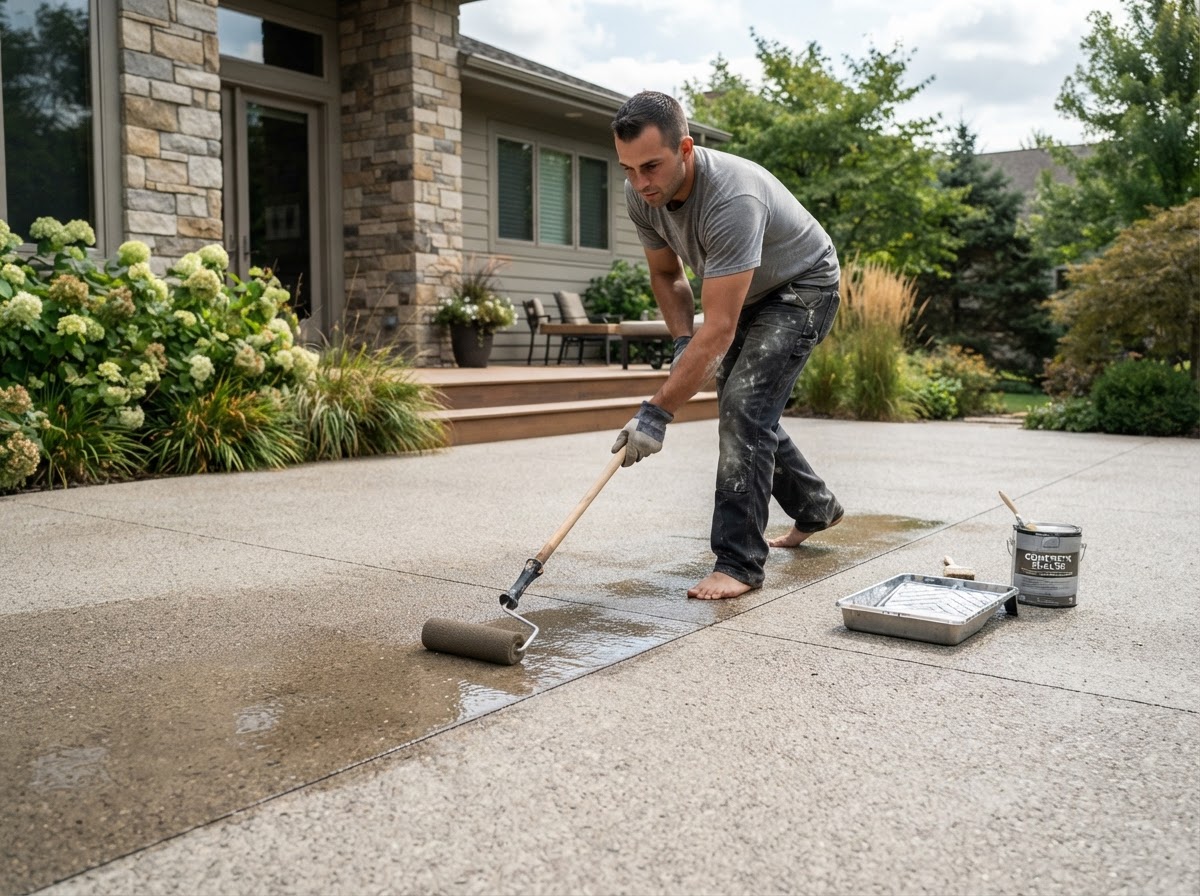
Concrete sealing applies a protective treatment to the surface of cured concrete. Sealers reduce water absorption, help the surface resist staining and deicing salt damage, and can slow the surface deterioration that freeze-thaw cycles cause. Decorative concrete, stamped surfaces, and resurfaced areas often benefit from sealing to protect the finish and appearance.
We use careful language around sealing. A sealer provides moisture resistance and water-repellent treatment — it does not make concrete fully waterproof in the structural sense. Sealing reduces water absorption where appropriate, but it does not stop active slab movement, correct failed drainage, or repair structural problems. The goal is surface protection, not a guarantee against every form of moisture.
Product suitability depends on the surface condition and intended use. A driveway carrying vehicle traffic needs a different approach than a stamped patio or a pool deck. We select the treatment based on what the surface is and how it is used.
Which Concrete Surfaces Can Be Sealed?
A range of exterior and interior concrete surfaces can be sealed when the surface is sound and properly prepared.
Surfaces Commonly Sealed
- Driveways to resist tire wear, deicing salts, and freeze-thaw moisture
- Patios to protect the finish and reduce staining
- Walkways and paths exposed to foot traffic and weather
- Steps and stoops where water and ice collect
- Stamped and decorative concrete to preserve pattern and color
- Pool decks where water exposure is constant
- Garage slabs where road salt and moisture enter through the door
- Resurfaced concrete to protect the overlay layer
Not every surface is a good candidate. Concrete with active movement, widespread cracking, or a failed base may need repair or replacement before sealing makes sense. We assess the surface first and explain whether sealing is appropriate or whether the underlying condition needs attention.
Concrete Sealing Process
Sealing follows a preparation-heavy sequence, because how well the surface is prepared determines how well the sealer performs.
- 1Surface evaluation — confirm the concrete is sound and suitable for sealing.
- 2Cleaning — remove dirt, oil, debris, and any failed previous coating.
- 3Drying — allow the surface to dry fully so the sealer bonds properly.
- 4Repairing suitable cracks or defects first — address damage before sealing.
- 5Surface preparation — profile or clean the surface per the product requirements.
- 6Product selection — choose a sealer suited to the surface and use.
- 7Application — apply the sealer evenly at the correct coverage rate.
- 8Drying and curing — allow the product to cure before the surface sees traffic.
- 9Recoat considerations — plan resealing intervals based on wear and exposure.
We do not claim all surfaces use the same sealer. A penetrating sealer behaves differently from a film-forming or decorative sealer, and the choice depends on whether the goal is invisible protection, enhanced appearance, or both.
Types of Concrete Sealers & Protective Treatments
Sealers fall into broad categories based on how they interact with the concrete surface. Understanding the difference helps set realistic expectations for appearance and performance.
Common Sealer Categories
- Penetrating sealers — soak into the surface to repel water without changing appearance much.
- Film-forming sealers — create a protective layer on top, often enhancing color and sheen.
- Decorative sealers — protect stamped or colored concrete while preserving the finish.
- Water-repellent treatments — reduce surface water absorption for moisture protection.
We avoid proprietary brand claims and instead match the sealer type to the surface. Stamped concrete often pairs with a decorative sealer, while a plain driveway may benefit from a penetrating treatment. For surfaces that have been renewed, concrete resurfacing and overlays come first, with sealing applied to protect the new surface. Existing damage is addressed through concrete repair, and pool decks receive treatments suited to constant water exposure.
Concrete Moisture, Freeze-Thaw & Seasonal Protection
Maryland's climate is a major reason to seal exterior concrete. Rainwater, freeze-thaw cycles, and deicing salts all work against an unprotected surface. Moisture that enters the concrete can freeze and expand, stressing the surface and contributing to spalling and scaling. Deicing products tracked onto driveways and walkways can accelerate surface breakdown when the concrete is unsealed.
Sun exposure and routine wear also affect how long a sealer lasts. A driveway in full sun with heavy vehicle traffic may need resealing sooner than a shaded patio with light foot traffic. Maintenance matters — keeping the surface clean and addressing damage early extends the life of both the concrete and the sealer.
It is important to be clear about what sealing does not do. Sealing does not repair structural problems, stop active slab movement, or correct failed drainage. A sealed surface still needs proper slope, functioning joints, and a sound base to perform well. Sealing is one part of protecting concrete, not a substitute for good installation and maintenance.
Discuss Your Concrete Project
Have questions about scope, timing, or whether repair or replacement is the right call? We are happy to review your project and provide a clear, honest estimate.
Concrete Sealing FAQs
Does concrete need to be sealed?
Exterior concrete often benefits from sealing, especially surfaces exposed to moisture, freeze-thaw cycles, and deicing salts. Sealing is not mandatory for every slab, but it can reduce water absorption and slow surface deterioration. We recommend sealing where the surface and exposure conditions make it worthwhile.
How often should concrete be resealed?
Resealing frequency depends on the sealer type, surface use, and exposure. A driveway with heavy vehicle traffic may need resealing sooner than a lightly used patio. Most exterior sealers last a couple of seasons to several years depending on conditions. We advise on a resealing schedule based on the specific surface.
Can stamped concrete be sealed?
Yes, stamped and decorative concrete is commonly sealed to protect the pattern, color, and surface texture. A decorative sealer helps preserve the appearance and resist wear. We select a sealer suited to the stamped surface and its exposure.
Can sealing stop concrete from cracking?
No. Sealing does not prevent cracking, which is driven by movement, settlement, shrinkage, and load. Sealing protects the surface from moisture and wear, but it does not address the structural causes of cracking. Cracks should be evaluated and repaired separately.
Does sealer make concrete waterproof?
Sealers provide water resistance and reduce absorption, but they do not make concrete fully waterproof in a structural sense. A sealed surface sheds and resists water better than an unsealed one, but it will still allow some moisture movement. Sealing is surface protection, not a waterproofing guarantee.
Can old concrete be sealed?
Yes, older concrete can often be sealed if the surface is sound and properly cleaned first. Concrete with extensive cracking, spalling, or a failed base may need repair or resurfacing before sealing makes sense. We evaluate the condition before recommending sealing.
What affects concrete sealing cost?
Sealing cost depends on the square footage, surface condition, sealer type, preparation required, and access. A clean, sound surface costs less to seal than one needing cleaning, repairs, or coating removal first. We provide project-specific estimates based on the actual scope.
Request a Concrete Sealing Estimate
If you want to protect a driveway, patio, or decorative concrete surface, Gaithersburg Concrete will evaluate the surface and recommend an appropriate sealing approach. Serving Gaithersburg and surrounding Montgomery County communities.
Related Concrete Services Near Gaithersburg
Stamped & Decorative Concrete
Premium slate, cobblestone, stone, and wood-plank patterns combined with integral colors and protective sealants.
Learn moreConcrete Resurfacing & Concrete Overlays
Restorative polymer-modified micro-toppings and decorative cement overlays for structurally sound yet worn concrete.
Learn moreConcrete Repair & Crack Repair
Targeted structural crack filling, spalling remediation, and damaged section patching to extend concrete longevity.
Learn moreConcrete Pool Deck Installation & Resurfacing
Cool-touch, slip-resistant concrete surrounds for in-ground pools designed for family safety and water resistance.
Learn moreRequest a Concrete Sealing Estimate
If you want to protect a driveway, patio, or decorative concrete surface, Gaithersburg Concrete will evaluate the surface and recommend an appropriate sealing approach. Serving Gaithersburg and surrounding Montgomery County communities.
- Project-specific estimates — no obligation
- Residential and commercial concrete work
- Serving Gaithersburg and surrounding Montgomery County
Request a Free Estimate
Tell us about your concrete project in Gaithersburg or nearby.